POSTERS
Integrative Multiomics: Bridging Metabolomics and Proteomics for Systems-Level Insights
Adam D. Kennedy1, Karen L. DeBalsi1, Richard Legro2, P. Ross Gunst1, Anne M. Evans1
Joseph McGinley1, Seul Kee Byeon2, Kishore Garapati2, Kari E. Wong1, Akhilesh Pandey.2,3
1Metabolon Inc.; 2Department of Laboratory Medicine and Pathology, Mayo Clinic, Rochester, Minnesota, USA; 3Center for Individualized Medicine, Mayo Clinic, Rochester, Minnesota, USA
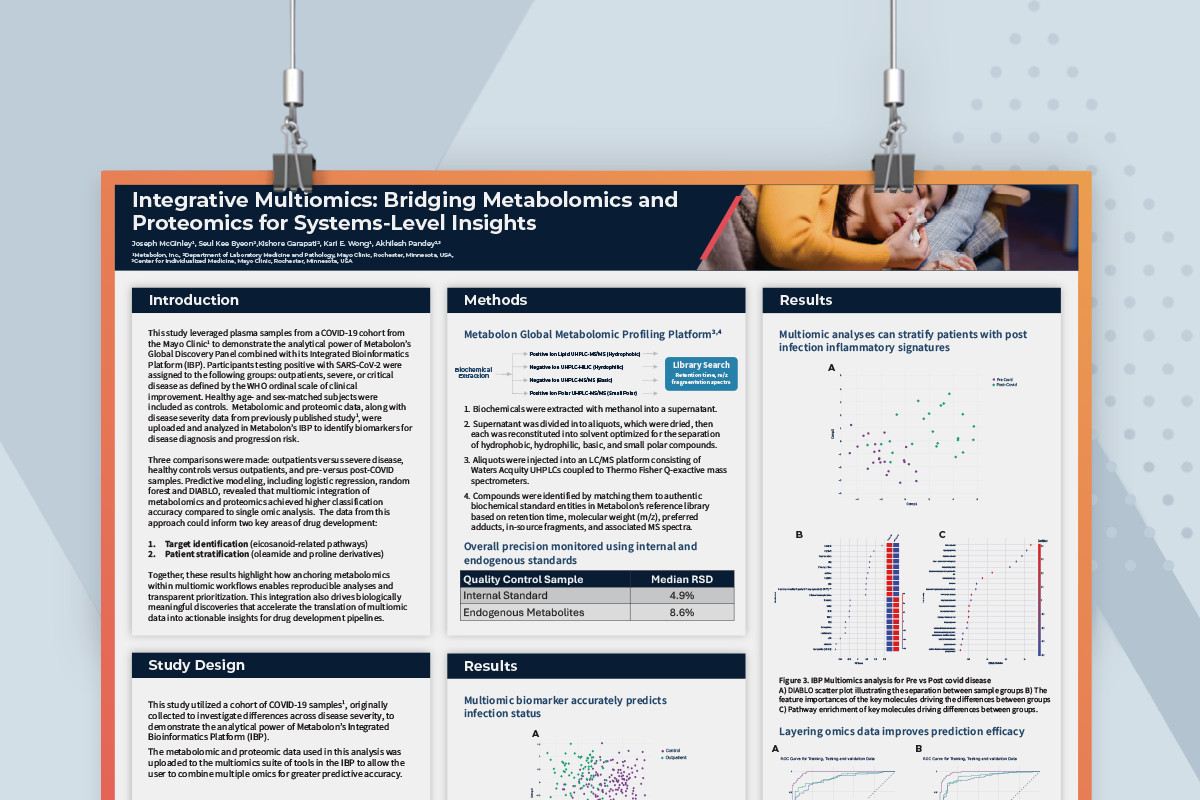
Plasma samples from a COVID-19 cohort from the Mayo Clinic were leveraged to demonstrate the analytical power of Metabolon’s Global Discovery Panel combined with its Integrated Bioinformatics Platform (IBP). Participants testing positive for SARS-CoV-2 were assigned to the following groups: outpatients, severe, or critical disease as defined by the WHO ordinal scale of clinical improvement. Healthy age- and sex-matched subjects were included as controls. Metabolomic and proteomic data, along with disease severity data from a previously published study, were uploaded and analyzed in Metabolon’s IBP to identify biomarkers for disease diagnosis and progression risk.
Three comparisons were made: outpatients versus severe disease, healthy controls versus outpatients, and pre- versus post-COVID samples. Predictive modeling, including logistic regression, random forest, and DIABLO, revealed that multiomic integration of metabolomics and proteomics achieved higher classification accuracy compared to single-omic analysis. The data from this approach could inform two key areas of drug development:
- Target identification (eicosanoid-related pathways)
- Patient stratification (oleamide and proline derivatives)
Together, these results highlight how anchoring metabolomics within multiomic workflows enables reproducible analyses and transparent prioritization. This integration also drives biologically meaningful discoveries that accelerate the translation of multiomic data into actionable insights for drug development pipelines.