
Capítulo 4
Neurodegenerative diseases, including Alzheimer’s disease, Parkinson’s disease, amyotrophic lateral sclerosis, and related disorders, are among the most burdensome in modern medicine primarily due to their extremely long latent period (Figure 8). Pathology often begins years before clinical symptoms appear, allowing neurodegeneration to progress largely undetected until after significant loss of neural function has occurred. The lack of sensitive biomarkers to detect these early molecular changes further limits opportunities for timely diagnosis and potential intervention.
Neurodegenerative diseases are also highly complex, as they develop based on interactions between genetic, molecular, cellular, environmental, and age-related factors, making it difficult to identify true drivers of disease and develop novel treatments. These conditions also demonstrate substantial heterogeneity. Patients who share the same clinical diagnosis often differ in their underlying disease biology, rate of progression, and response to treatment, which significantly limits our ability to prognosticate patient outcomes.
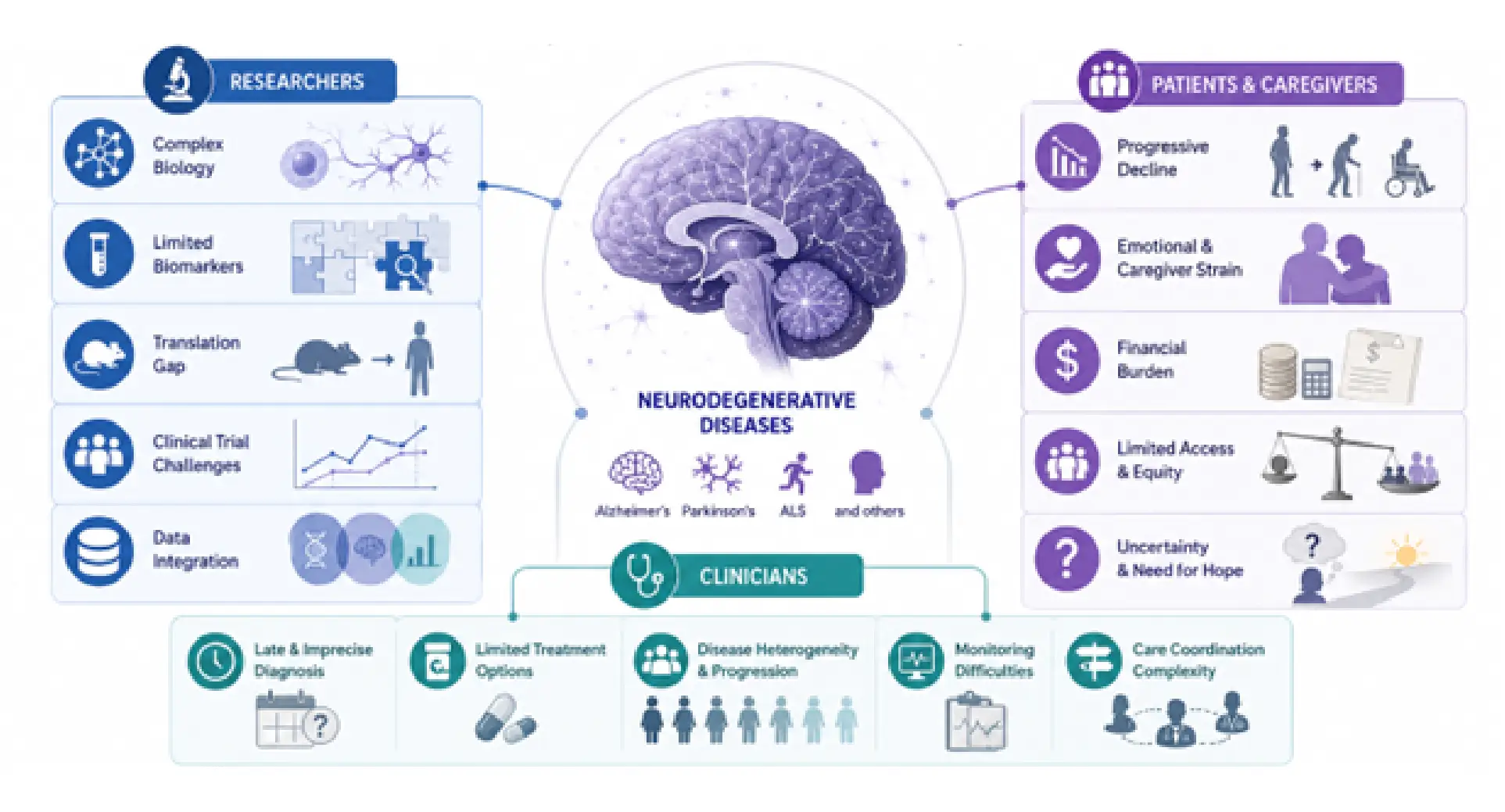
Figure 8. An overview of key challenges faced by clinicians, patients, and investigators in the field of neurodegenerative research and patient care. Multiomics approaches have demonstrated encouraging progress towards addressing these challenges. Image licensed under CC BY 4.0.
Multiomics has been instrumental in providing insight that can help address these key issues. For example, longitudinal multiomic profiling has helped elucidate and characterize molecular changes that precede clinical symptoms and occur during various disease trajectories. Integration of molecular layers has also helped disentangle the biological networks that drive neurodegeneration, helping to identify clinically relevant disease subtypes that may differ in prognosis and treatment response.
Overall, these findings can improve our ability to stratify patients with high precision, leading to increased success of clinical trials and prolonged maintenance of cognitive function. Currently, multiomics is helping lay the foundation for improving predictions of disease trajectory, diagnosing disease earlier, and supporting precision medicine approaches, to ultimately improve patient outcomes and reduce the significant financial and societal burden of these diseases. In this chapter, we will discuss three examples that show how multiomics has been used in these capacities.
Biomarkers that can reliably predict the progression of neurodegenerative diseases over time is a significant unmet need. In the case of Alzheimer’s disease (AD), patients initially present with mild cognitive impairment (MCI), yet only some progress to AD, while others remain stable. The biological processes that determine progression verses stability are poorly understood. Having the ability to predict which patients are likely to progress would identify at-risk people before substantial irreversible neurodegeneration were to occur. Not only would this support appropriate long-term care planning, but it would also allow tailored monitoring and treatment that could potentially preserve cognitive function for as long as possible. The lack of prognostic biomarkers is becoming increasingly important as new AD-modifying therapies emerge, underscoring the need for tools that can identify patients who are most likely to progress and would therefore benefit the most from specific interventions.
To this end, Francois and colleagues aimed to identify novel blood-based biomarkers capable of distinguishing individuals with MCI and AD from cognitively normal individuals with the goal of better understanding the molecular and metabolic changes associated with disease progression33. The long term goal of this group’s work is to identify biomarkers that can support earlier diagnosis, improve prognostication, and inform more personalized patient management.
Given that AD is a highly complex disease, a multiomics approach was necessary to adequately evaluate the molecular basis of disease progression. The study employed integrated multiomics to identify molecular signatures associated with MCI and AD. Plasma samples from 20 patients with MCI and 20 patients with AD were analyzed using untargeted gas chromatography-mass spectrometry (GC-MS) and targeted central carbon metabolism (CCM) profiling, untargeted ultra-high performance liquid chromatography-quadrupole time-of-flight mass spectrometry (UHPLC-QToF-MS), and untargeted proteomics using liquid chromatography-mass spectrometry (LC-MS) to characterize alterations in metabolites, lipids, and proteins.
One-way ANOVA was used to compare clinical and demographic characteristics among study groups, partial least squares discriminant analysis (PLS-DA) was used to evaluate group separation based on each omics dataset, and generalized linear models adjusted for age, sex, and APOE ε4 status were used to identify disease-associated molecules. Diagnostic performance was assessed using receiver operating characteristic (ROC) curve analyses, while least absolute shrinkage and selection operator (LASSO) modeling was used to identify the smallest set of biomarkers capable of distinguishing cognitively normal individuals from those with MCI or AD.
Multiomics profiling revealed widespread alterations in plasma proteins, metabolites, and lipids across the continuum from cognitively normal (CN) individuals to patients with MCI and AD. Proteins emerged as the strongest discriminators of disease status, with a 6-protein signature consisting of skeletal/aortic smooth/cardiac actin, mannan-binding lectin serine protease 1 (MASP1), serum amyloid A2, fibronectin, extracellular matrix protein 1, and keratin 9 providing exceptional diagnostic performance. When combined with age, sex, and APOE ε4 status, this protein panel distinguished individuals with MCI from cognitively normal controls with an AUC of 1.0, indicating near-perfect classification (Figure 9). Metabolomic analyses also identified several disease-associated metabolites, including N-acetyl-α-D-glucosamine-1-phosphate, D-mannose, myo-inositol, L-glutamine, hypoxanthine, L-glutamic acid, uridine, and methylmalonic acid. Predictive metabolomic models achieved AUC values of up to 0.95 for identifying MCI and AD.
Although lipid biomarkers were less discriminatory than proteins and metabolites, lipidomic analyses revealed significant disruptions in glycerophospholipid metabolism, autophagy, and glycosylphosphatidylinositol (GPI)-anchor biosynthesis, suggesting alterations in membrane integrity, cellular signaling, and cellular maintenance processes. Integration of proteomic and metabolomic data further uncovered extensive pathway-level abnormalities involving amino acid metabolism, energy production, nucleotide synthesis, and redox regulation, including disruptions in arginine, alanine, aspartate, glutamate, pyruvate, purine, and pyrimidine metabolism, as well as the pentose phosphate pathway and tricarboxylic acid (TCA) cycle (Figure 10). The analysis also highlighted significant perturbations in complement, coagulation, immune, and inflammatory pathways, providing a systems-level view of the molecular changes associated with disease progression.
This study highlights the potential of multiomics to address several significant challenges in AD. First, multiomics could help identify at-risk individuals before substantial and often irreversible neurodegeneration occurs. Blood-based biomarkers capable of distinguishing cognitively normal individuals from those with MCI or AD could support earlier diagnosis and improve monitoring of at-risk individuals. By revealing distinct molecular signatures and pathway alterations, this study’s findings show that multiomics approaches may enable more personalized treatment strategies, improved prognostication, selection of therapies targeting specific biological processes, and the development of more biologically homogeneous patient populations for clinical research. The next study delves further into the heterogeneity of neurodegenerative diseases and demonstrates in greater detail how multiomics may be used to help characterize mechanisms that govern unique trajectories of disease.
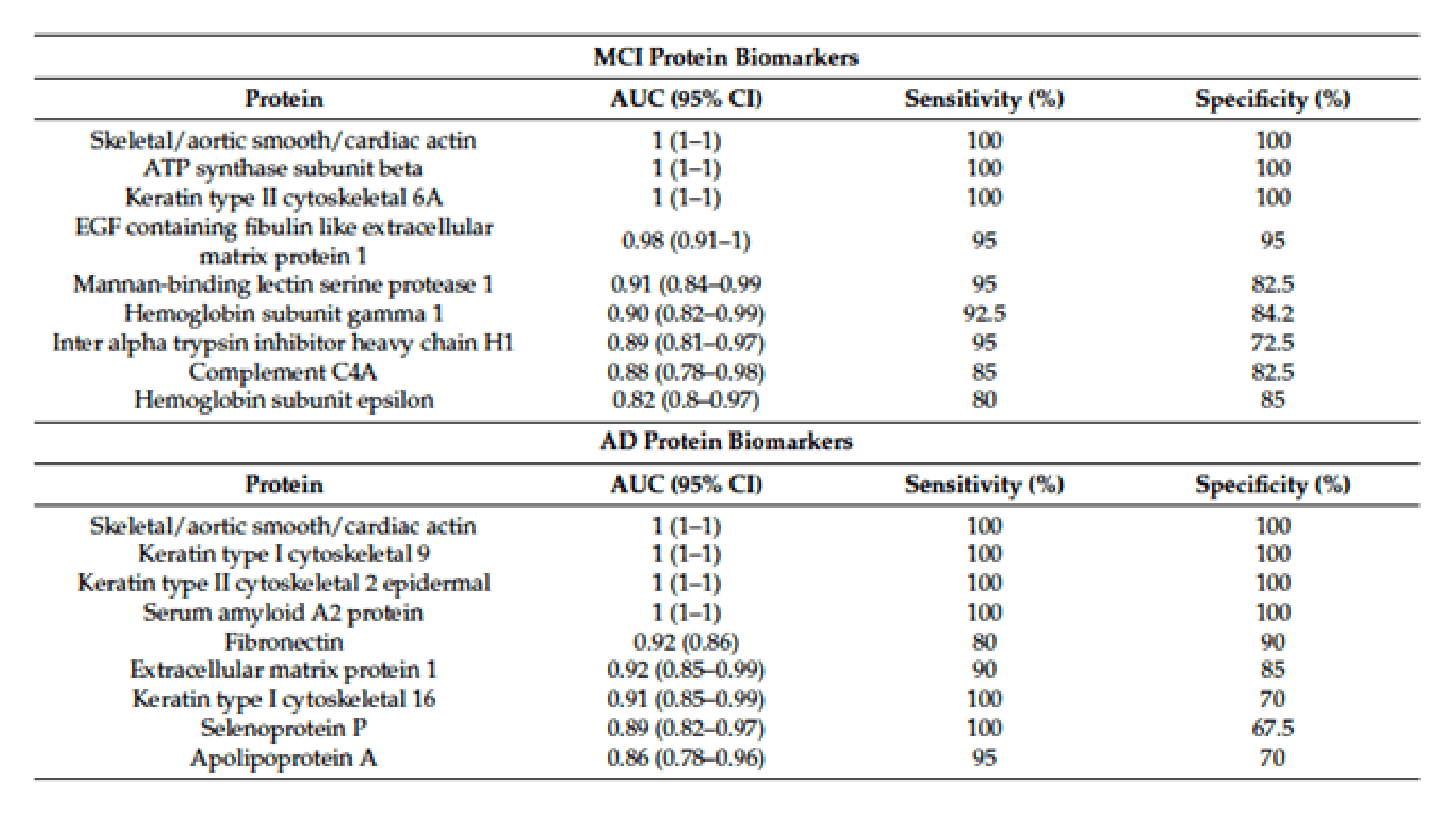
Figure 9. A list of the top protein biomarkers for clinical classification of MCI and AD, adjusted for age, sex, and APOE ε4 status. Image licensed under CC BY 4.0.
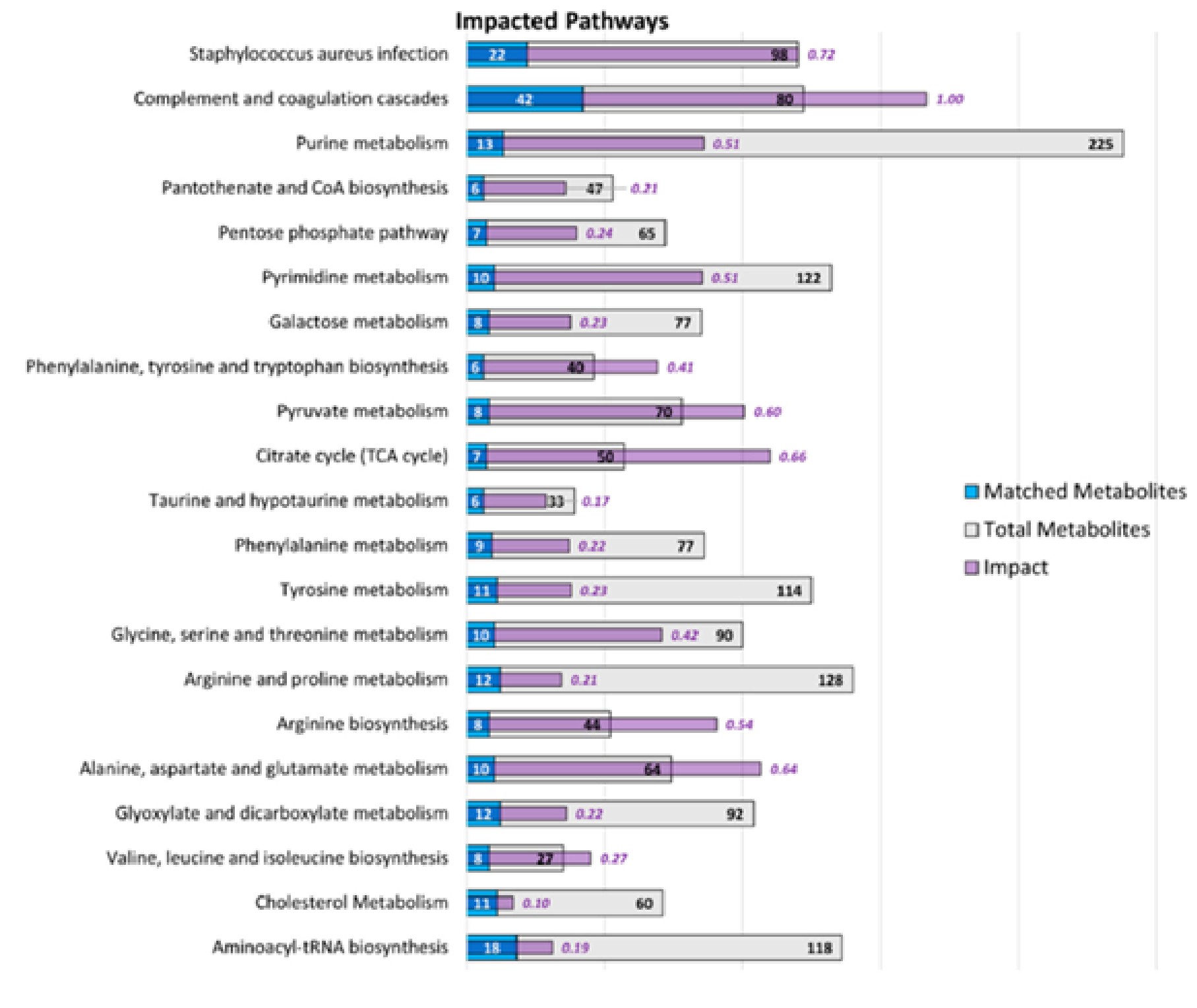
Figure 10. Significant pathways expressed in plasma from AD and MCI relative to cognitively normal individuals. The number of components in each pathway is presented as ‘total metabolites’ (grey bars); the number of molecules matched to these pathways are presented as ‘matched metabolites’ (blue bars); the ‘impact’ value represents the extent to which these pathways are impacted by the disease. Image licensed under CC BY 4.0.
A major challenge across many complex diseases is the inability to account for substantial biological heterogeneity when predicting disease progression and selecting the most effective treatments for individual patients. In Alzheimer’s disease (AD), this heterogeneity limits accurate prognostication and contributes to variable treatment responses, hindering the development of personalized therapeutic strategies. Multiomics approaches can help address this challenge by providing a more comprehensive view of patient-specific molecular profiles. In the following study, investigators used an integrative multiomics approach to identify molecular signatures and biological pathways associated with different stages of AD
Study investigators identified novel biomarker signatures that improved prediction of both AD pathology and future cognitive decline. A 4-molecule signature consisting of 14-3-3 protein zeta/delta, clusterin, interleukin-15 (IL-15), and transgelin-2 significantly improved the prediction of AD pathology beyond demographic and APOe-based clinical models, increasing model sensitivity, specificity, and overall discrimination. A separate 4-molecule signature, comprised of 14-3-3 protein zeta/delta, clusterin, cholesteryl ester 27:1/16:0, and monocyte chemoattractant protein-1, improved prediction of longitudinal cognitive decline. Pathway enrichment analyses linked the identified molecular signatures to hemostasis, immune response, and extracellular matrix signaling pathways, suggesting that vascular dysfunction, inflammation, and tissue remodeling contribute to AD pathogenesis alongside the classical amyloid and tau pathways. The study also identified several potentially novel AD-associated molecules, including kininogen-1, total cysteine, cholesteryl ester 27:1/16:0, neurexophilin-4, and dynein light-chain 2, which may represent promising biomarkers or therapeutic targets for future investigation.
Clinical heterogeneity is a key barrier to prognosticating neurodegenerative disorders because they represent a spectrum of biological subtypes rather than a single disease. In this study, multiomics identified novel biomarker signatures that were shown to predict the trajectory of AD with higher accuracy than traditional biomarkers, while also generating hypotheses regarding mechanisms that account for disease heterogeneity. Overall, multiomics approaches can capture the complexity of neurodegenerative disease better than single omics approaches, which may help define molecular subgroups and ultimately improve patient stratification to reduce clinical trial failure rates. The next takes a deep dive into the role of multiomics in characterizing biological mechanisms that drive disease progression with the goal of targeting the root cause of disease pathology rather than symptoms alone.
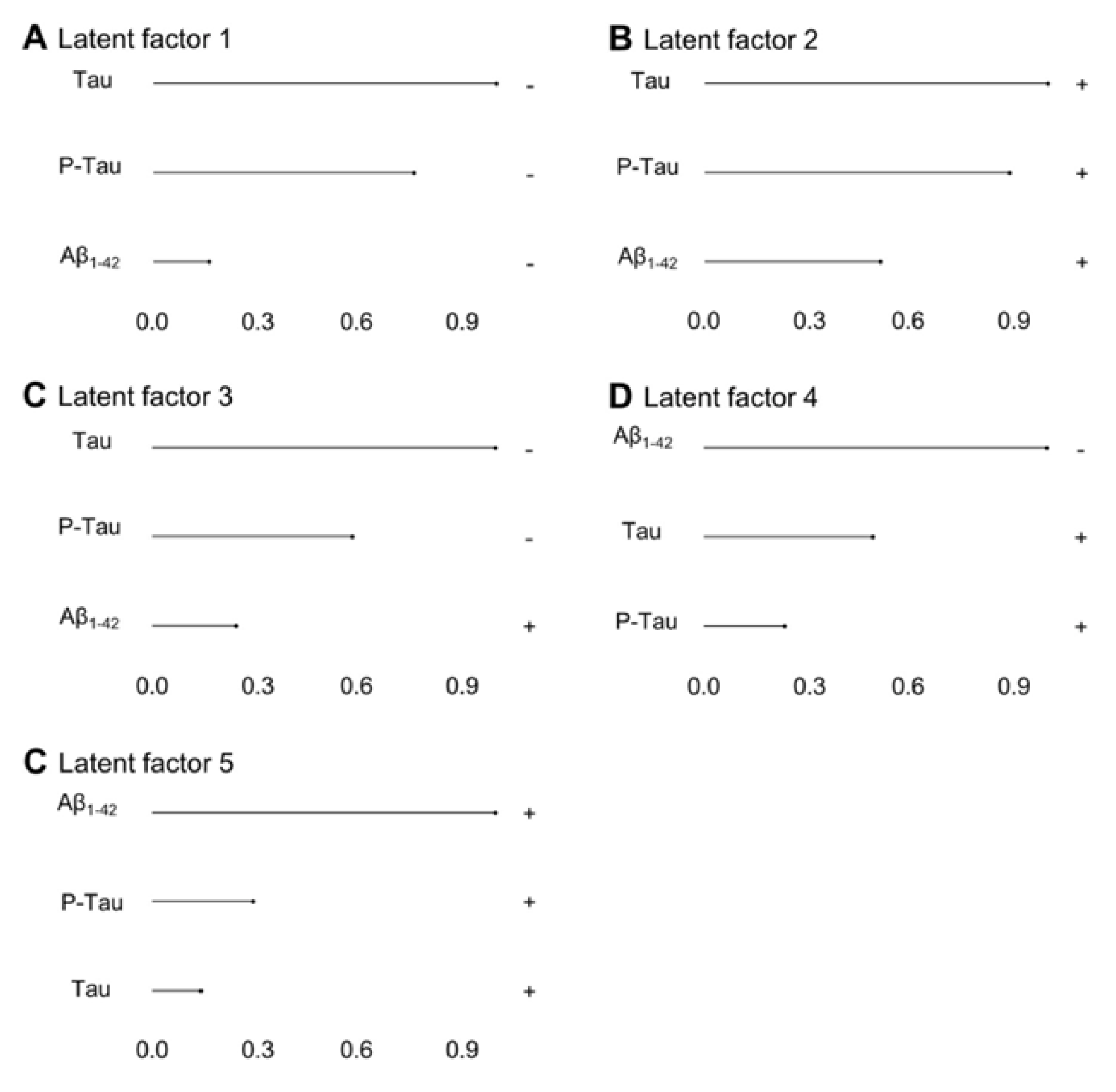
Figure 11. Normalized loadings of CSF AD biomarkers are shown on the X-axis across 5 LFs of the trained MOFA model. Positive or negative signs indicate the relative direction of the CSF AD biomarkers with the associated LF. Image licensed under CC BY 4.0.
Effectively treating neurodegenerative diseases is stymied by the limited ability to move beyond symptom management and address the underlying biological mechanisms that drive disease progression. In Parkinson’s disease (PD), current therapies primarily target motor symptoms but do not correct the metabolic dysfunction and mitochondrial impairment that are increasingly recognized as central contributors to neurodegeneration and cognitive decline. As a result, many patients continue to experience progressive worsening of both motor and nonmotor symptoms despite treatment, highlighting the need for disease-modifying strategies. Multiomics approaches can help address this challenge by identifying dysregulated metabolic pathways and therapeutic targets that contribute to disease progression.
Owing to the metabolic dysfunction associated with PD pathology, this randomized, double-blinded placebo-controlled phase II clinical trial tested whether clinical outcomes could be improved in PD patients treated with Combined Metabolic Activators (CMA) designed to correct mitochondrial dysfunction and metabolic abnormalities associated with neurodegeneration and cognitive impairment35. The broader goal of this work was to determine whether targeting underlying metabolic dysfunction could provide benefits beyond symptomatic treatment alone.
Study participants were given an 84-day course of oral CMA or placebo. Metabolomic profiling was performed using untargeted liquid chromatography-mass spectrometry (LC-MS) on plasma samples from 48 patients, while proteomic analysis was conducted using the Olink proximity extension assay (PEA) to assess treatment-associated changes in inflammatory, metabolic, and neurological pathways. Statistical analyses included linear mixed-effects models to evaluate longitudinal changes in clinical outcomes based on Montreal Cognitive Assessment (MoCA) scores, unified Parkinson’s disease rating scale (UPDRS) scores, and laboratory measures, as well as two-way ANOVAs and Cohen’s effect size calculations to assess treatment effects across groups and timepoints. Linear models for microarray data were used to identify significantly altered proteins and metabolites between baseline and day 84, and between treatment and control groups, along with two-way ANOVA to identify predictors of cognitive response. Neuroimaging analyses incorporated independent component analysis to define resting-state brain networks, dual regression and general linear models to assess network-specific changes, and two-way mixed ANOVA to evaluate treatment-by-time effects on functional connectivity.
The most important clinical finding was a significant improvement in cognition, measured by MoCA scores. These scores increased significantly after 84 days of CMA treatment (p < 0.05), whereas the placebo group did not show a sustained improvement over the same period. The greatest benefit was observed in patients with more severe baseline cognitive impairment, suggesting that individuals with greater cognitive deficits may derive the most pronounced cognitive benefit from treatment. Clinical chemistry analyses showed additional systemic improvements following CMA treatment, including significant reductions in glucose, total bilirubin, alkaline phosphatase (ALP), and eosinophil counts. Untargeted plasma metabolomics further demonstrated broad metabolic reprogramming, with 75 significantly altered metabolites and pathway enrichment in amino acid, lipid, nicotinamide/NAD+, carnitine, and methionine metabolism. Proteomic profiling revealed reductions in 20 proteins associated with inflammation, immune activation, oxidative stress, and cellular injury, including OSM, MMP9, GSTP1, NCF2, and MNDA, with multi-omics network analysis linking these molecular changes directly to improvements in MoCA scores (Figure 12). These results were supported by functional MRI findings showing increased activity in the anterior salience network and executive control regions in the CMA group, alongside evidence of subgroup heterogeneity indicating greater response in patients with lower baseline cognition and more favorable metabolic profiles. Overall, this study’s findings provide evidence that metabolic intervention can improve cognitive performance even in established PD.
This study shows how multiomics can help characterize mechanisms, define molecular signatures of treatment response, and guide novel therapeutic strategies that address the root cause of disease rather than symptoms alone. These approaches can be widely applied to neurodegenerative diseases to help improve patient selection, monitor target engagement, and enhance the efficiency and success of future clinical trials.
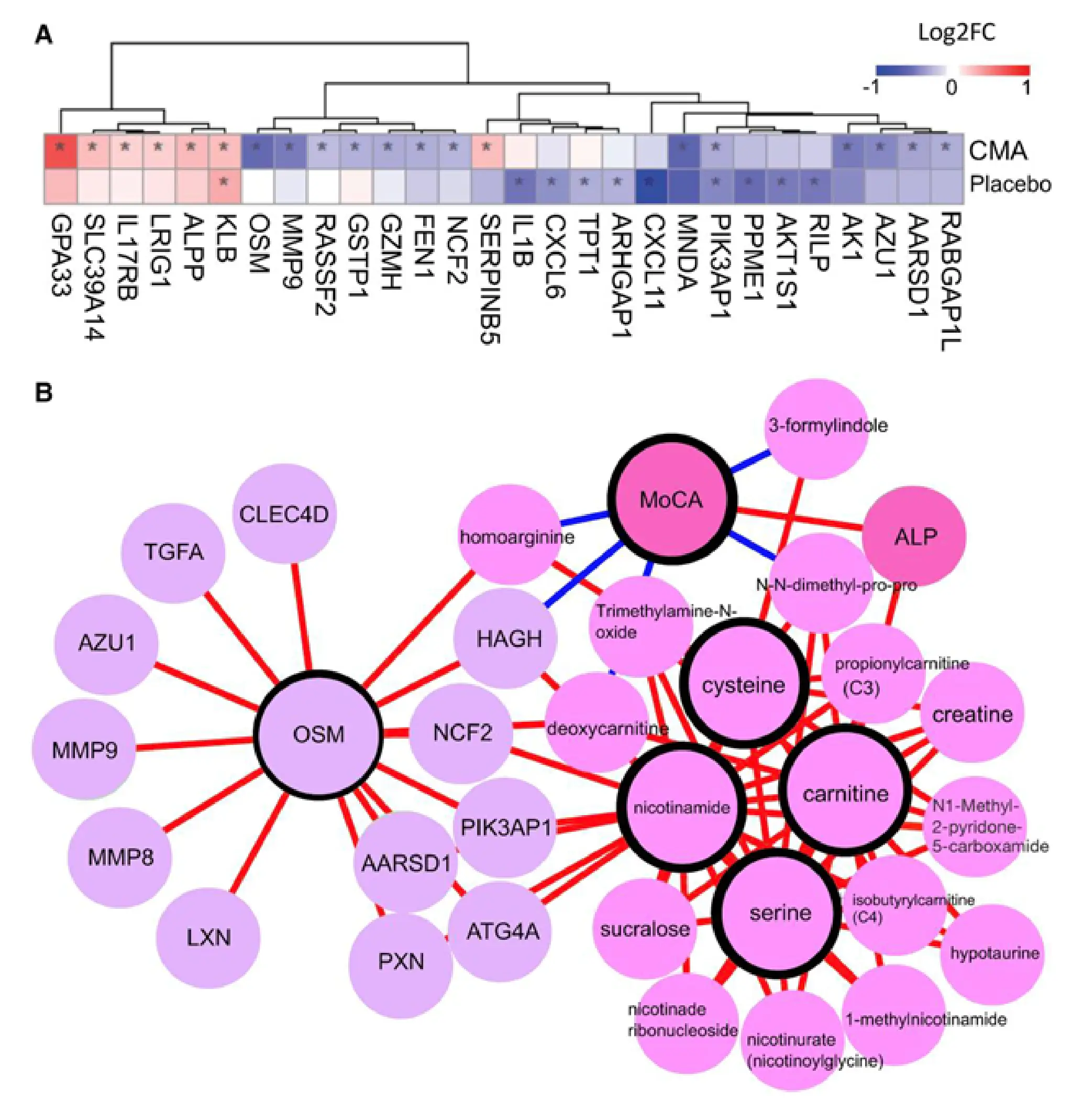
Figure 12. Altered plasma protein levels and integrated multiomics network. (A) Heatmap showing alterations between the significantly different proteins on day 84 versus baseline in the CMA (n=28) and placebo (n=15) groups. Asterisks indicate statistical significance. (B) Integrated multiomics data based on network analysis. Plasma levels of serine, carnitine, nicotinamide, cysteine, MMP9, and OSM were associated with increased MoCA scores in the CMA group. Image licensed under CC BY 4.0.
Una vez que se comprende todo el valor de la metabolómica, la única pregunta que queda es: ¿quién lo hace mejor? Aunque muchos laboratorios cuentan con capacidades para la elaboración de perfiles de metabolitos o de química analítica, las tecnologías de metabolómica integrales son extremadamente escasas.
La identificación precisa e imparcial de los metabolitos en todo el metaboloma plantea retos en cuanto a la relación señal-ruido que muy pocos laboratorios están preparados para afrontar. Además, convertir cantidades ingentes de datos en información útil resulta lento, cuando no imposible, para la mayoría, ya que una interpretación adecuada requiere dos elementos de los que se carece: experiencia y una base de datos exhaustiva.
Gracias a nuestra sólida plataforma y a nuestras herramientas de visualización, nuestros expertos son los únicos capaces de ofrecerle más información sobre su molécula y desarrollar paneles de ensayos que le ayuden a concentrarse en los resultados que necesita.
Cobertura
Capacidad para interrogar a miles de metabolitos a través de diversos espacios bioquímicos, revelando nuevos conocimientos y oportunidades.
Comparabilidad
Capacidad para integrar los datos de diferentes estudios en el mismo conjunto de datos, en diferentes geografías, entre diferentes pacientes a lo largo del tiempo.
Competencia
Capacidad para informar sobre el diseño adecuado de los estudios, generar datos de alta calidad, obtener conocimientos biológicos y formular recomendaciones prácticas.
Capacidad
Capacidad para procesar cientos de miles de muestras de forma rápida y rentable para dar servicio a una demanda en rápido crecimiento.
Solicite un presupuesto para nuestros servicios, obtenga más información sobre tipos de muestras y procedimientos de manipulación, solicite una carta de apoyo o envíe una pregunta sobre cómo la metabolómica puede hacer avanzar su investigación.
Sede central
617 Davis Drive, Suite 100
Morrisville, NC 27560
Dirección postal
Apartado de correos 110407
Research Triangle Park, NC 27709
Teléfono
+1 (919) 572-1711
Fax
+1 (919) 572-1721
Sede central internacional
Metabolon
Zeppelinstraße 3
85399 Hallbergmoos
Alemania