

Turn metabolomic signals into mechanistic hypotheses you can actually investigate.
Metabolite profile
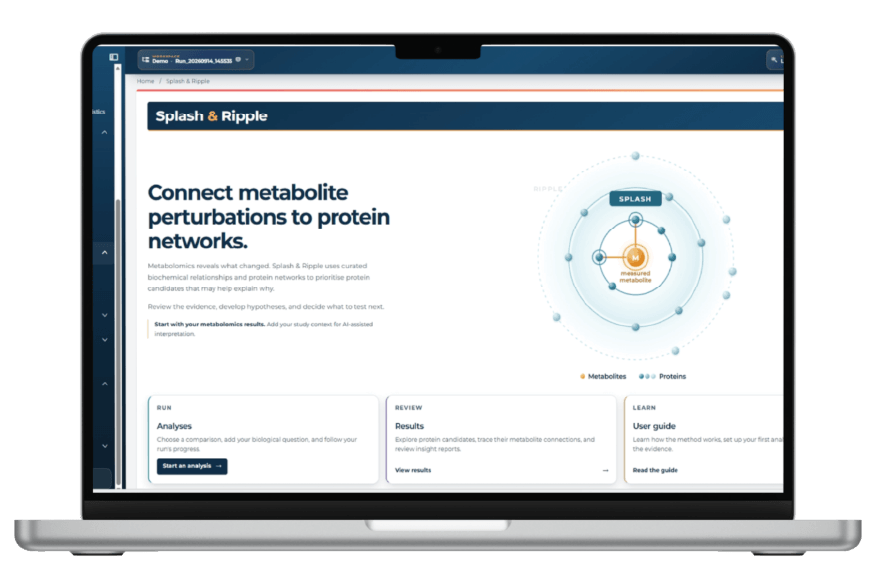
The perturbed metabolite(s) that have been measured.
Splash (direct)
A curated biochemical link to perturbed metabolites — the enzymes, transporters and receptors that touch the compound itself.
Splash (indirect)
One or two high-confidence interaction steps from a protein that has a direct connection, such as regulators or signaling proteins off the metabolic map.
Ripple (distal)
Interactions three or four steps away under stricter evidence thresholds, after the Splash candidates have been removed.
The Problem
Metabolomics reveals patterns of chemical changes. Developing a hypothesis to explain why those changes occurred, and how to test it, is the next critical step.
Enrichment names categories, not proteins. Correlation stays inside the measured omic. Manual interpretation reaches proteins, but is time consuming and subject to bias.
The Concept
Metabolites are readouts of upstream proteins. Several perturbed metabolites may connect to the same protein or protein neighbourhood, forming points of convergence.
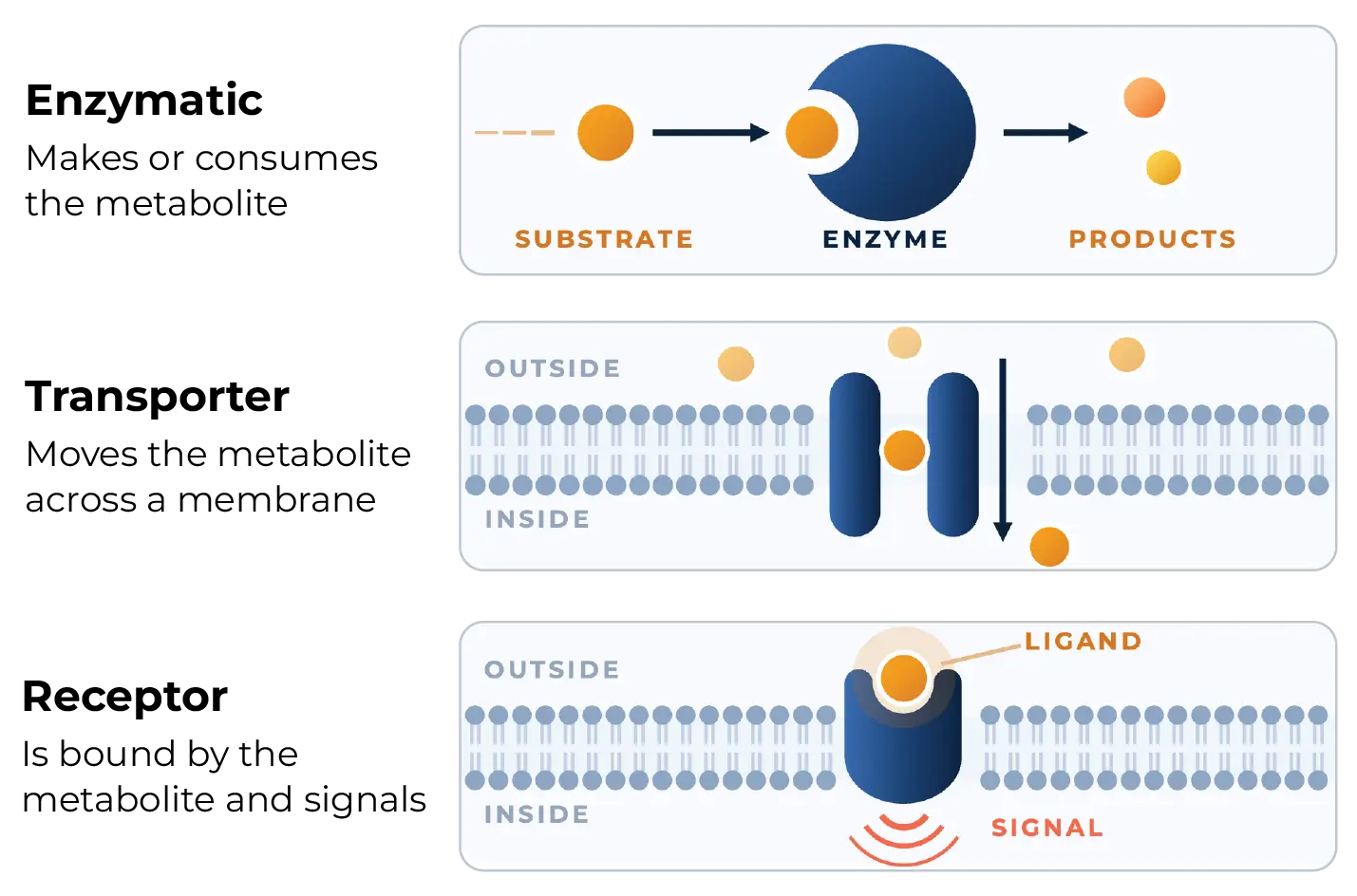
These connections include enzymes that produce or consume metabolites, transporters that influence their uptake, efflux or distribution, and receptors that mediate metabolite sensing and signalling.
Splash & Ripple follows these connections outward from measured biology.
The Bottleneck
A metabolite without a recorded protein connection cannot contribute to the network analysis, regardless of how significantly its abundance changes.
Database curation can lag behind published research, leaving documented relationships unavailable to network methods.
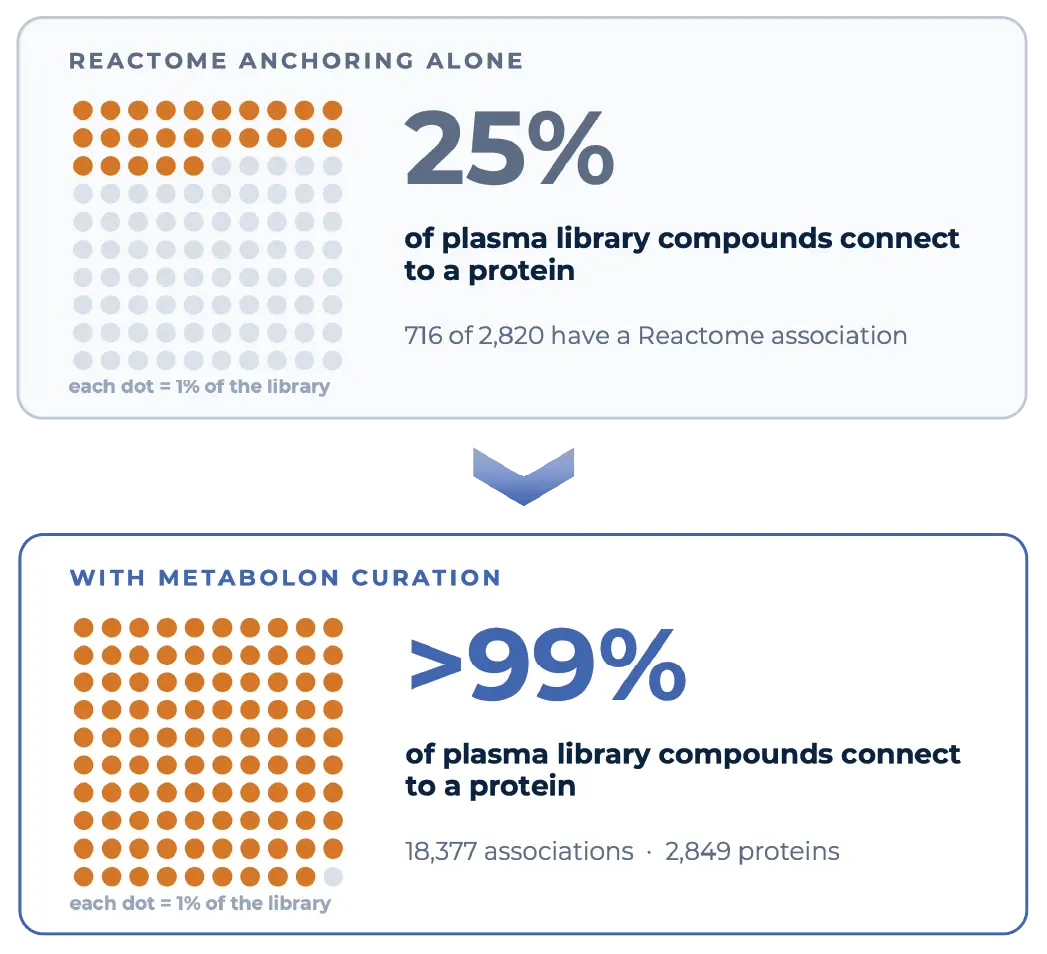
Metabolon developed the Metabolite Affiliated Proteins (MAP) database to address this gap. Building on Reactome, our experts curated additional relationships from published literature and trusted resources, expanding mapping coverage from approximately 25% to 99% of compounds in our plasma libraries.*
* Library mapping coverage versus Reactome version 92. Coverage varies by sample type and study.
The Solution
Splash & Ripple maps perturbed metabolites onto curated protein relationships, propagates those relationships across a protein interaction network, and applies deterministic scoring to rank candidate proteins for further investigation.
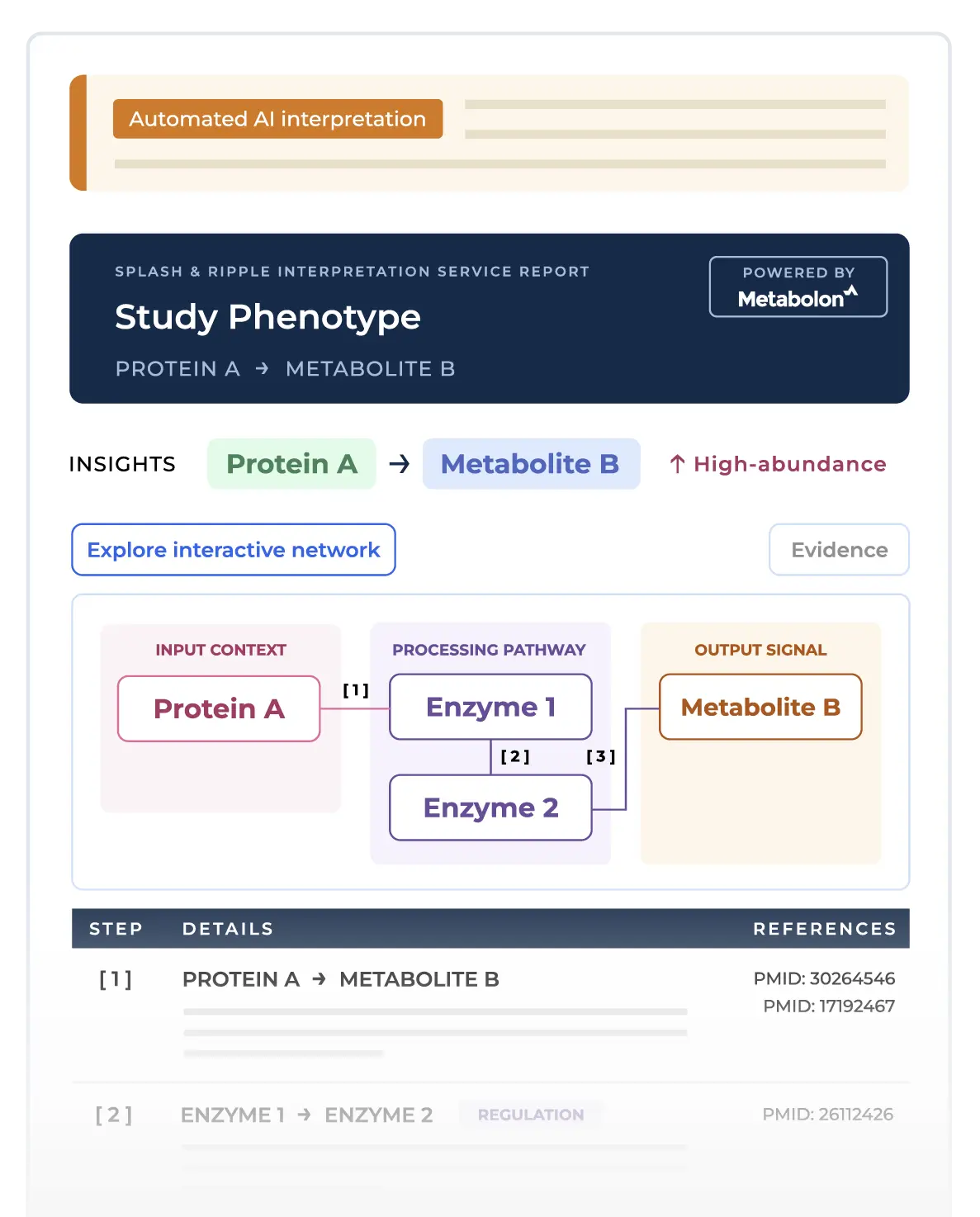
The interpretation workflow combines deterministic criteria and artificial intelligence. Each insight report examines a single protein–metabolite relationship and its network route in the context of the study phenotype, proposing a mechanistic hypothesis with literature references and evidence grades.
The Benefit
Splash & Ripple reduces manual interpretation and makes protein biology more accessible to researchers without specialist expertise, accelerating the path from metabolite changes to testable hypotheses.
The result is a reasoned next experiment, anchored in measured biology and supporting evidence.
Turn your metabolomic results into prioritized protein candidates, explicit mechanistic hypotheses, and a clearer path toward experimental validation.
Fill out the form to speak to an expert about leveraging Splash & Ripple for your next study.