
One kit, broad applications
The Metabolon Verus™ Kit enables breakthrough research across therapeutic areas, research settings, and sample types.
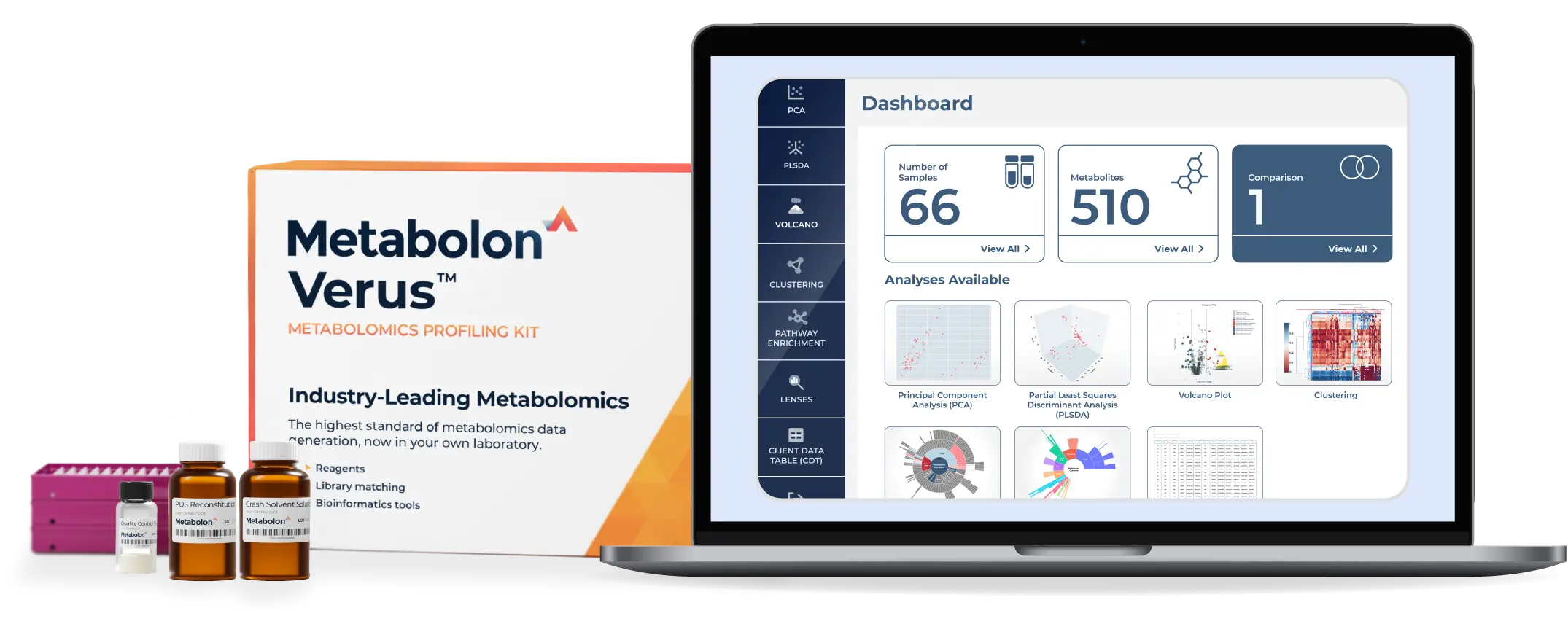
One kit, broad applications
The Metabolon Verus™ Kit enables breakthrough research across therapeutic areas, research settings, and sample types.
Explore themes and applications
For the Metabolon Verus™ Metabolomics Profiling Kit
Biomarker Studies
Treatment response
Identify metabolite signatures associated with disease, treatment response, or physiological states to support biomarker discovery and validation.
Multi-omics Integration
Transcriptomics
Proteomics
Integrate metabolomics with genomics, transcriptomics, proteomics, and microbiome data to connect molecular changes to real-time biological phenotype.
Mechanism of Action
Interventions
Exposures
Reveal pathway perturbations and biochemical responses that help explain how drugs, interventions, or environmental exposures impact biology.
Drug Target Discovery
Biological processes
Identify metabolically connected pathways and biological processes that uncover novel therapeutic
targets and opportunities for intervention.
Disease Underpinnings
Molecular mechanisms
Characterize altered metabolic pathways to better understand disease biology, progression, and underlying molecular mechanisms.
Patient Stratification
Cohort definition
Differentiate patient subgroups based on metabolic phenotypes to support precision medicine and improved cohort definition.
Responder/Non-Responder
Treatment outcomes
Identify metabolic patterns associated with therapeutic response or resistance to help predict and monitor treatment outcomes.
Population Studies
Enable large-scale characterization of metabolic variation across populations to study health, disease
risk, lifestyle, diet, and environmental influences.
Safety/Toxicity Assessment
Organ stress
Detect biochemical changes associated with toxicity, organ stress, or off-target effects to support safety evaluation and risk assessment.
Biological Stress
Redox
Profile markers that report on systemic biological stress responses such as inflammation, injury, glycemic stress, oxidative stress, wasting and stress signaling molecules.
Exposome and Nutrition
Xenobiotics
Profile a variety of exposures including dietary, halogens, consumer products and medications.
Microbiome Research
Bile acids
Measure microbial signals that influence human health through secondary bile acids, aromatic / indole amino acid derivatives and many other metabolites of established microbial origin.
Liver Function
See functional outputs of liver Phase 2 metabolism, as well as markers that report on liver health.
Kidney Function
See metabolites that report on kidney function and injury, as well as uremic toxins.
Energy and Mitochondrial Health
Mitochondria
Profile metabolites from central energy pathways, as well as cofactors that support reactions, signaling molecules and molecules catabolized to generate energy.
Cancer Metabolism
Redox balance
Characterize tumor-driven metabolic reprogramming through alterations in glycolysis, TCA cycle intermediates, amino acid utilization, redox balance, and oncometabolite pathways associated with proliferation and therapeutic response.
Metabolic Disease
Cardiometabolism
Profile lipid metabolism, bile acid signaling, acylcarnitines, and amino acid pathways linked to insulin resistance, mitochondrial dysfunction, cardiometabolic health, and energy homeostasis.
Immunometabolism
Immune profiling
Characterize tryptophan/arginine pathways and lipid mediators that define immune tone and inflammatory state.
Explore themes and applications for the Metabolon Verus™ Metabolomics Profiling Kit
Biomarker Studies
Treatment response
Identify metabolite signatures associated with disease, treatment response, or physiological states to support biomarker discovery and validation.
Multi-omics Integration
Transcriptomics
Proteomics
Integrate metabolomics with genomics, transcriptomics, proteomics, and microbiome data to connect molecular changes to real-time biological phenotype.
Mechanism of Action
Interventions
Exposures
Reveal pathway perturbations and biochemical responses that help explain how drugs, interventions, or environmental exposures impact biology.
Drug Target Discovery
Biological processes
Identify metabolically connected pathways and biological processes that uncover novel therapeutic
targets and opportunities for intervention.
Disease Underpinnings
Molecular mechanisms
Characterize altered metabolic pathways to better understand disease biology, progression, and underlying molecular mechanisms.
Patient Stratification
Cohort definition
Differentiate patient subgroups based on metabolic phenotypes to support precision medicine and improved cohort definition.
Responder/Non-Responder
Treatment outcomes
Identify metabolic patterns associated with therapeutic response or resistance to help predict and monitor treatment outcomes.
Population Studies
Enable large-scale characterization of metabolic variation across populations to study health, disease
risk, lifestyle, diet, and environmental influences.
Safety/Toxicity Assessment
Organ stress
Detect biochemical changes associated with toxicity, organ stress, or off-target effects to support safety evaluation and risk assessment.
Biological Stress
Redox
Profile markers that report on systemic biological stress responses such as inflammation, injury, glycemic stress, oxidative stress, wasting and stress signaling molecules.
Exposome and Nutrition
Xenobiotics
Profile a variety of exposures including dietary, halogens, consumer products and medications.
Microbiome Research
Bile acids
Measure microbial signals that influence human health through secondary bile acids, aromatic / indole amino acid derivatives and many other metabolites of established microbial origin.
Liver Function
See functional outputs of liver Phase 2 metabolism, as well as markers that report on liver health.
Kidney Function
See metabolites that report on kidney function and injury, as well as uremic toxins.
Energy and Mitochondrial Health
Mitochondria
Profile metabolites from central energy pathways, as well as cofactors that support reactions, signaling molecules and molecules catabolized to generate energy.
Cancer Metabolism
Redox balance
Characterize tumor-driven metabolic reprogramming through alterations in glycolysis, TCA cycle intermediates, amino acid utilization, redox balance, and oncometabolite pathways associated with proliferation and therapeutic response.
Metabolic Disease
Cardiometabolism
Profile lipid metabolism, bile acid signaling, acylcarnitines, and amino acid pathways linked to insulin resistance, mitochondrial dysfunction, cardiometabolic health, and energy homeostasis.
Immunometabolism
Immune profiling
Characterize tryptophan/arginine pathways and lipid mediators that define immune tone and inflammatory state.
