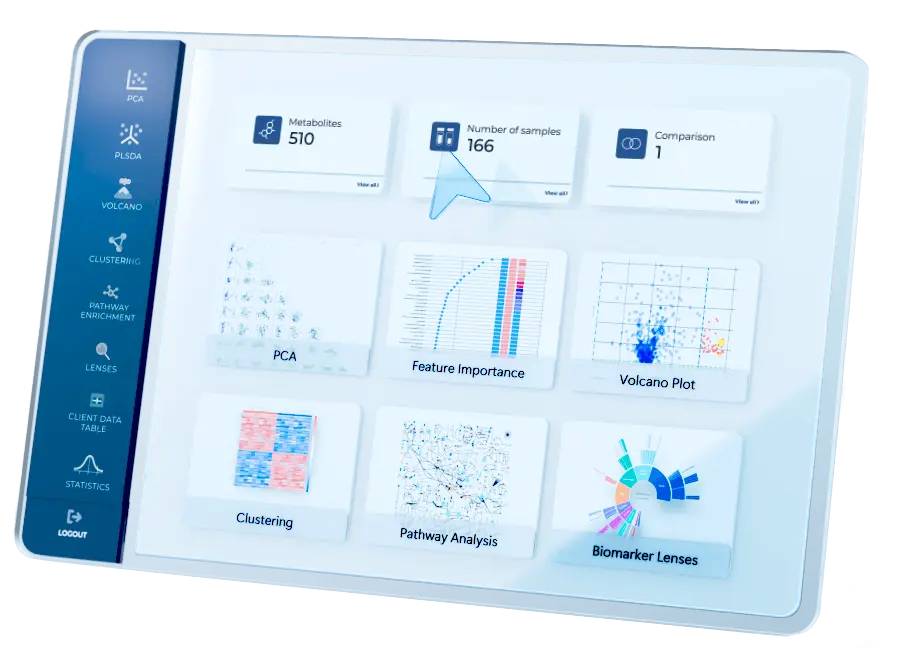
The Integrated Bioinformatics Platform is your unparalleled solution for metabolomics research. Supported by Metabolon’s proprietary metabolite library, robust analytical tools, and reporting visualizations, you can collaborate with teams across the world to gain biological insights into your data.
Powered by experience
Elucidate findings faster with the coverage and confidence of Metabolon’s proprietary metabolite library, which is capable of detecting, identifying, and quantifying up to 5,400 annotated analytes in a single biological sample.
Multi-user, multi-site collaboration
Create new users and invite them to your projects, then share saved views and filters to collaborate from anywhere in the world to advanced multi-centered studies in one unified platform.
Data visualization tools
Take advantage of customization options to prepare your data for posters, presentations, and publications. Adjust colors, sizes, labels, and legends to make your plots and diagrams unique and easily understood.
Splash & Ripple
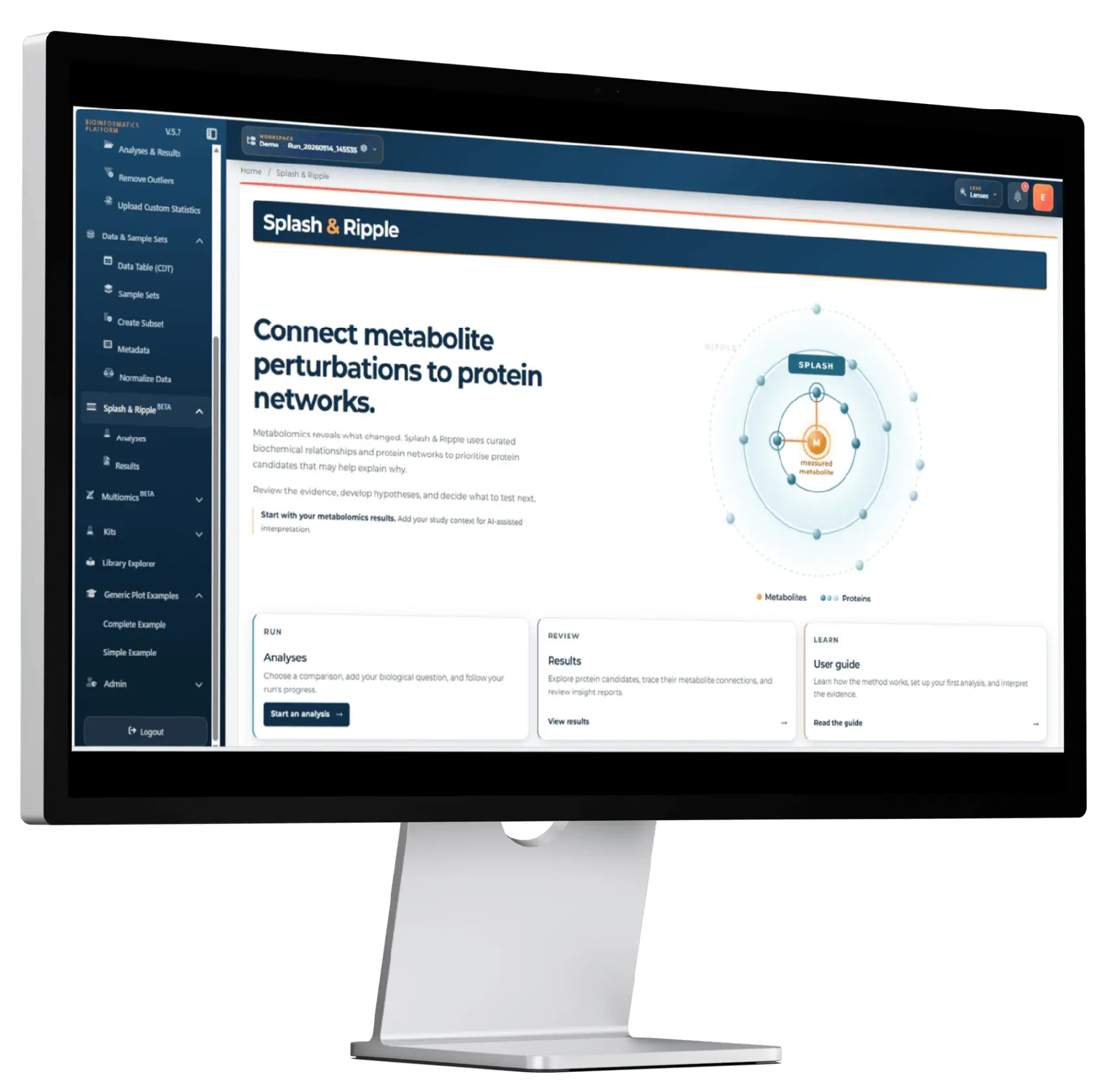
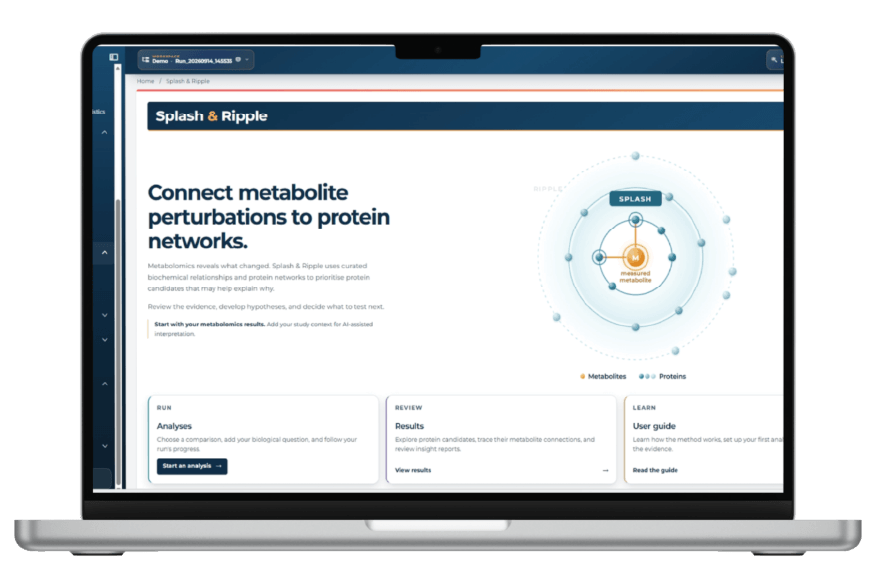
Metabolon’s new Splash & Ripple workflow works backward from metabolomic readouts, connecting perturbed metabolites to the proteins most likely to explain observed biological responses.
Starting with a perturbed metabolite profile, Splash & Ripple maps those metabolites onto curated protein relationships, applies deterministic scoring and AI-assisted reasoning, and delivers a ranked, evidence-linked set of candidate proteins and genes for further investigation.
PCA provides a first look at the main relationships in the data and observes highly correlated metabolomic profiles which may help with hypothesis generation and planning of more detailed analysis.
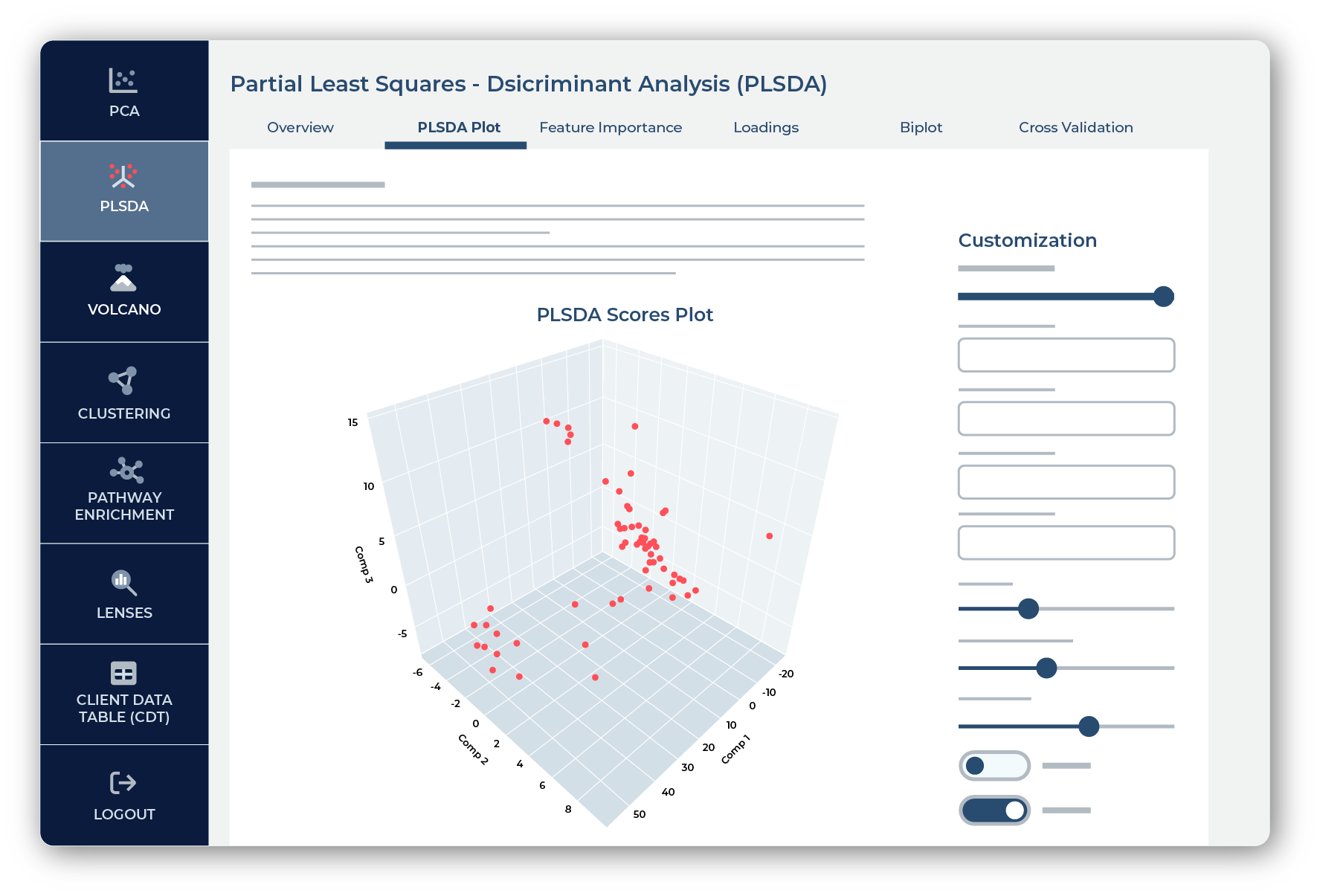
PLS-DA effectively filters out noise and focuses on metabolites that are most relevant for distinguishing between groups, offering a clearer view of the most impactful data features.
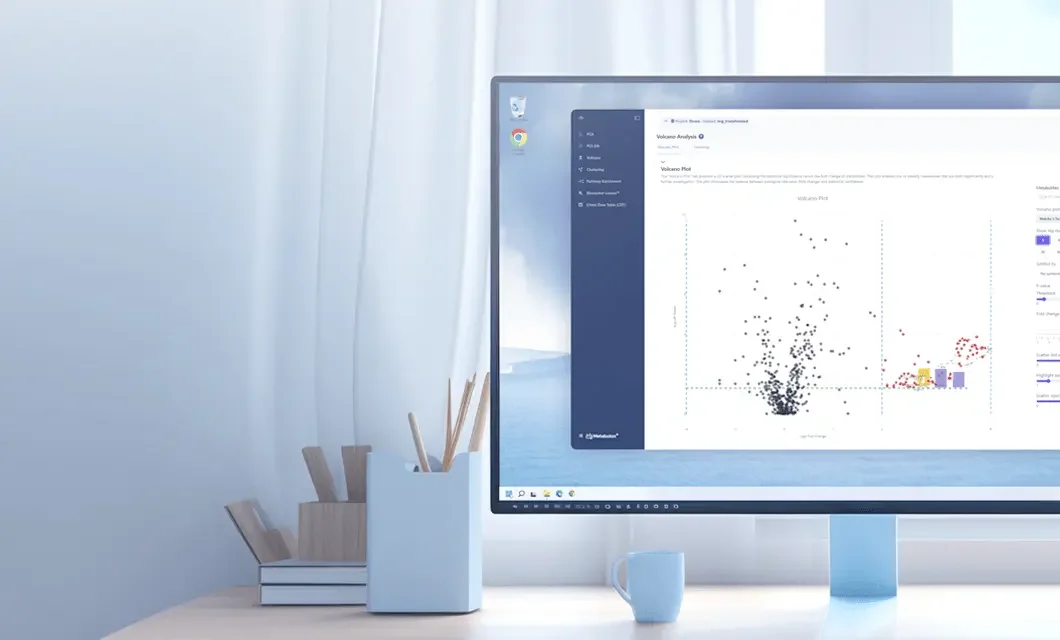
This graphical representation allows for the quick and intuitive identification of data points that exhibit large magnitude changes and are statistically significant, which are often of greatest biological interest.
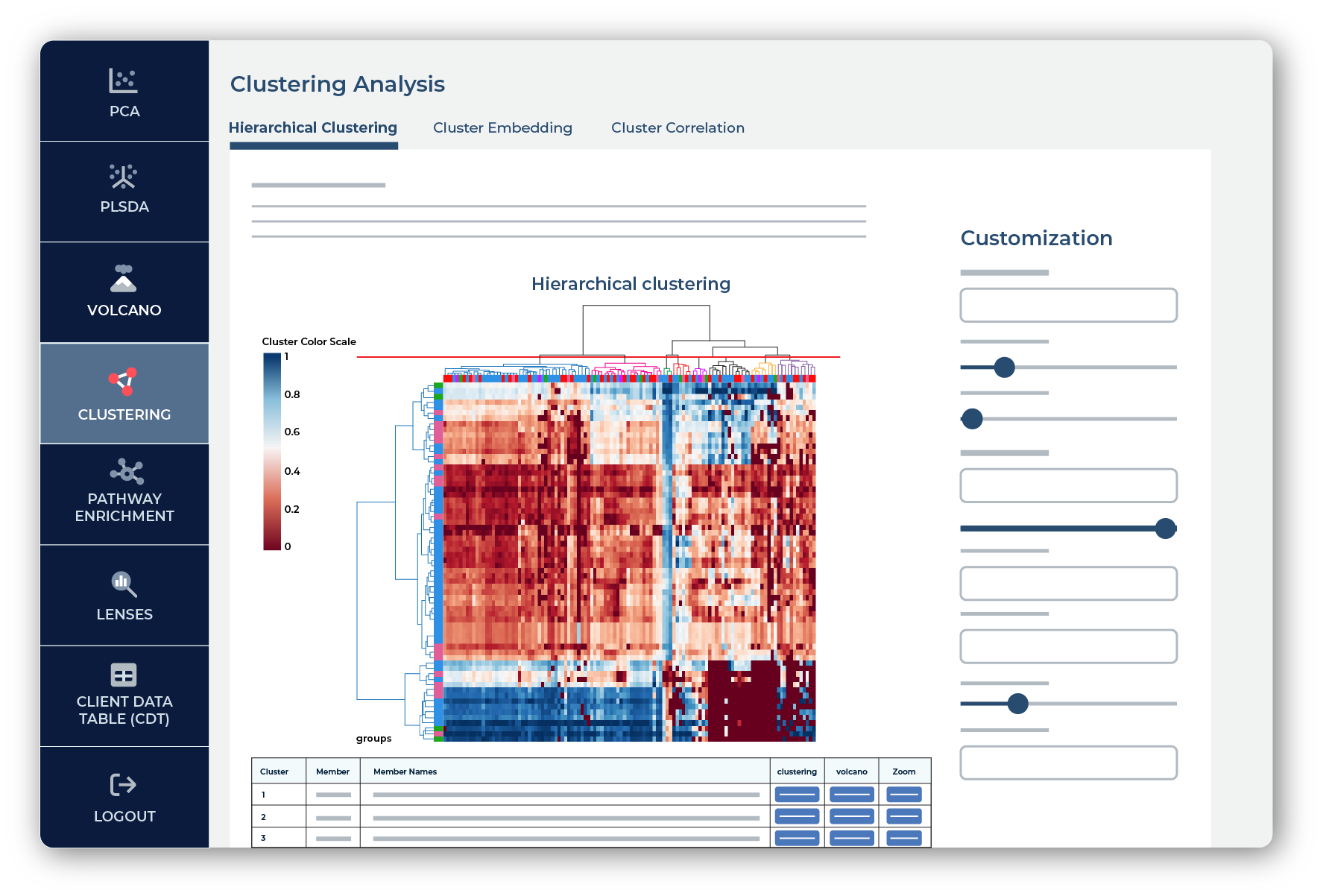
Clustering is a powerful method used to organize both metabolites and samples into meaningful groups. It reduces complexity and guides focused, hypothesis-driven research.
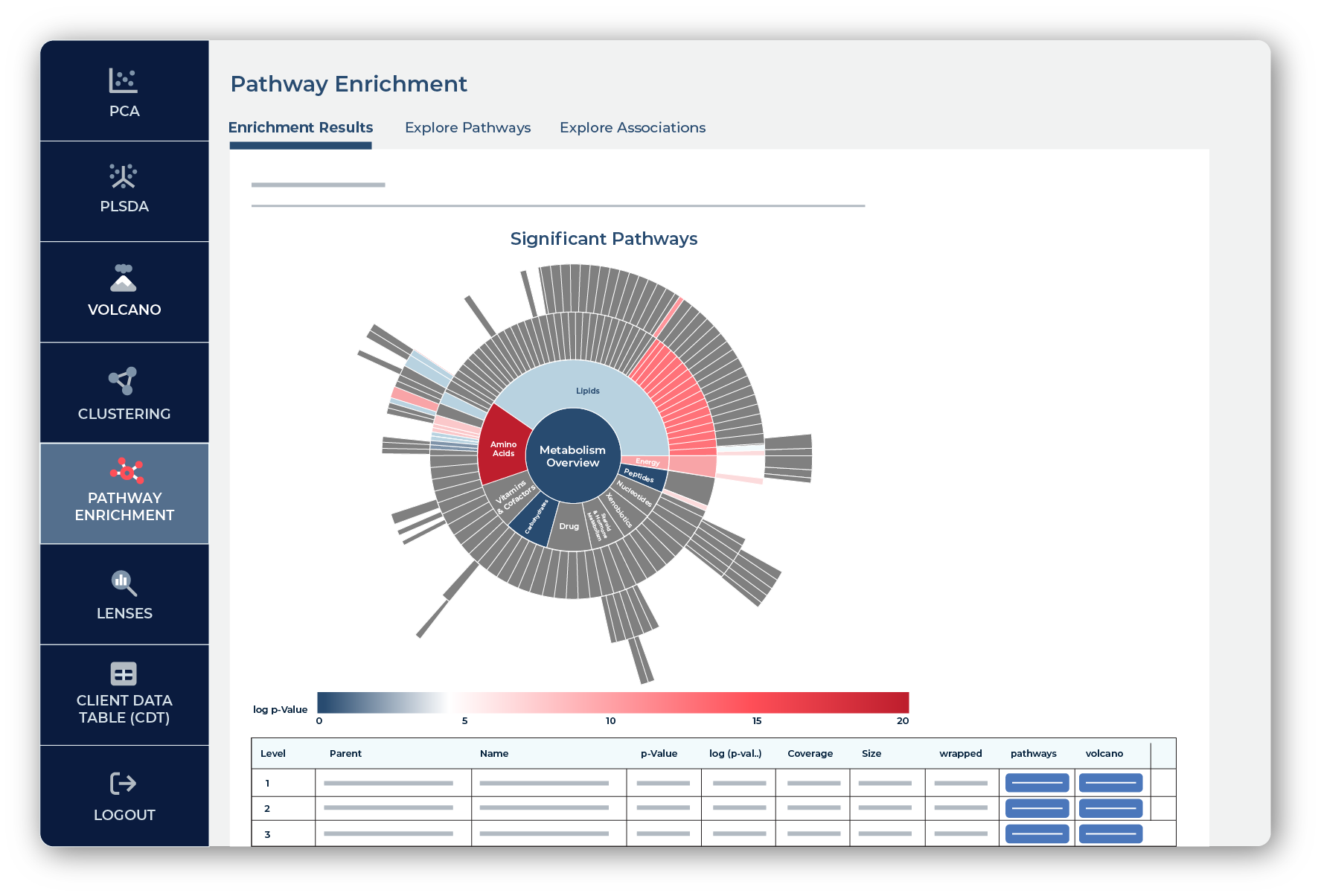
Pathway analysis can guide experimental design, ensuring efficient resource utilization and focused exploration of biologically relevant areas.
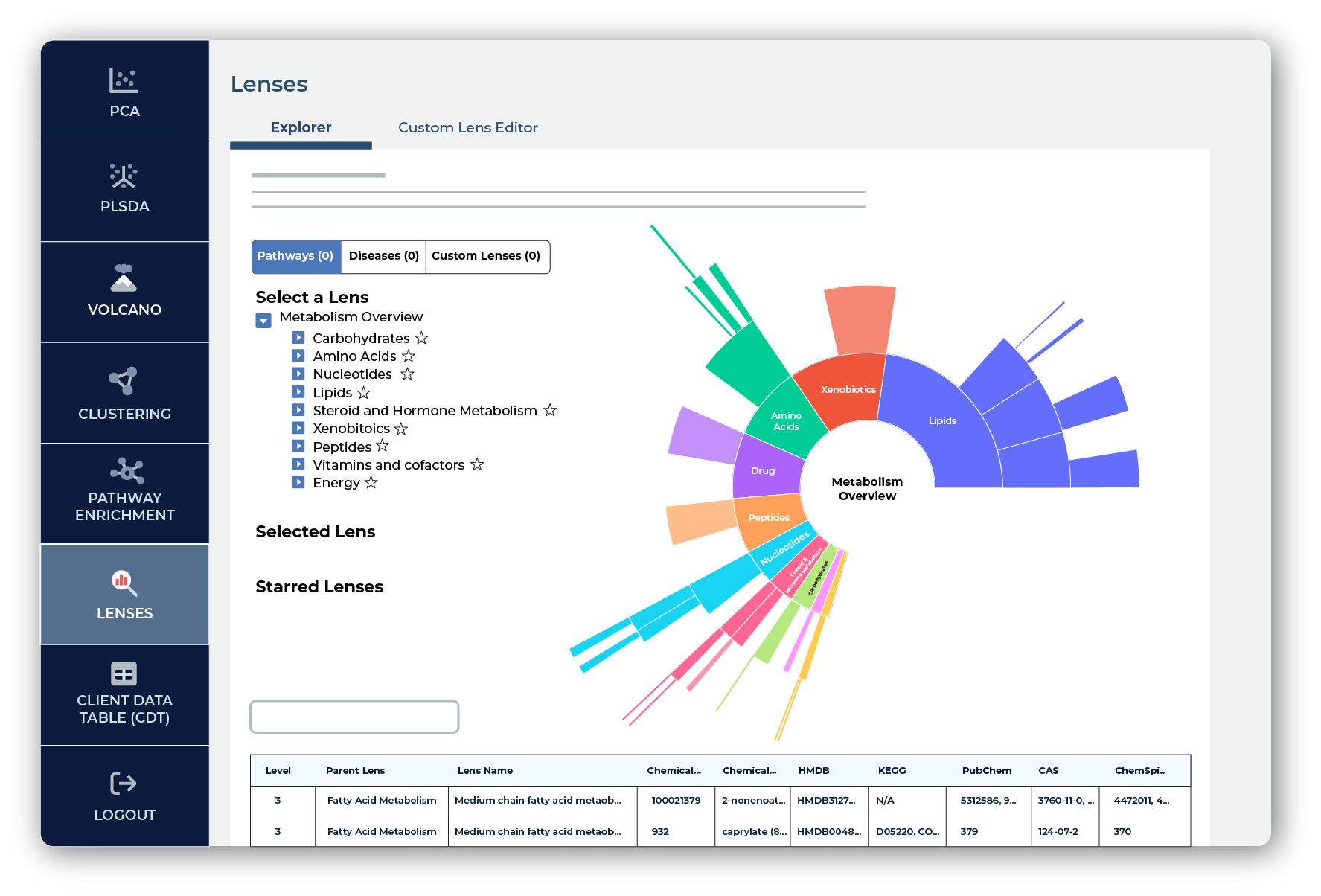
The Biomarker Lenses® tool is designed to refine metabolomics analysis by isolating specific metabolic or disease-related subsets of data.
Statistical analyses are performed on the log-transformed batch-normalized, imputed data using Metabolon’s internal pipeline, which uses the R computing language to perform statistical computations via a Jupyter Notebooks user interface.
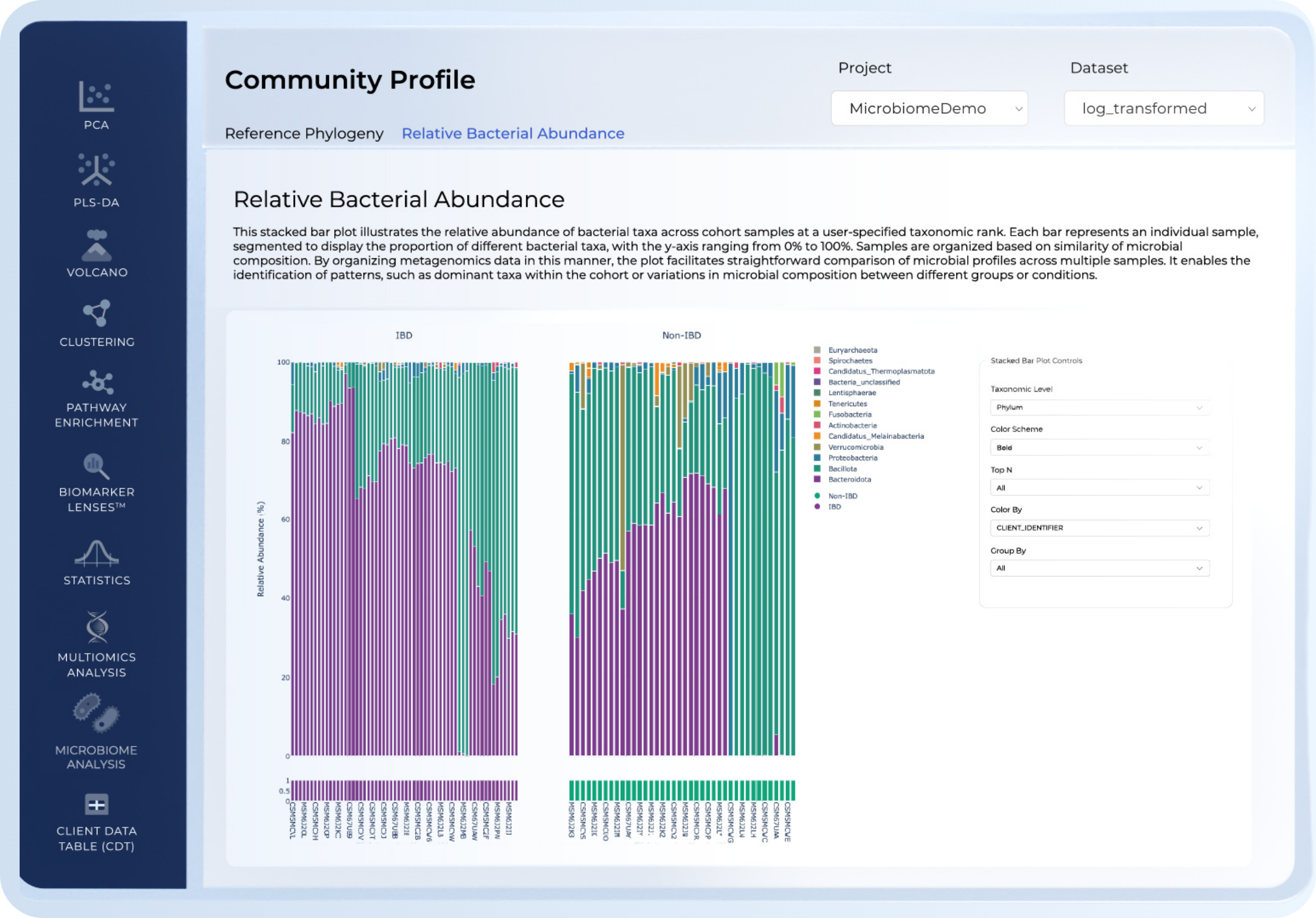
This tool allows researchers to upload, process, and analyze multiomics data and when combined with Metabolomics data offers the most complete understanding of the phenotype available.
Unify metagenomic, metabolomic, and phenotypic data within a codeless, accessible platform that simplifies complex analyses without compromising flexibility or analytical depth and rigor.
Metabolon’s Splash & Ripple workflow works backward from the metabolomic readout, connecting perturbed metabolites to the proteins most likely to explain the observed biological response.
Starting with a perturbed metabolite profile, Splash & Ripple maps those metabolites onto curated protein relationships, applies deterministic scoring and AI-assisted reasoning, and delivers a ranked, evidence-linked set of candidate proteins and genes for further investigation.
“By combining our extensive industry experience with cutting-edge AI technology, we are empowering researchers to navigate complex data effortlessly and accelerate discoveries in the life sciences.”
Ray Moran, Ph.D.
VP, Tech & Artificial Intelligence, Metabolon
Bioinformatics is an interdisciplinary field that combines biology, computer science, mathematics, and statistics to analyze and interpret biological data, particularly at the molecular level. Bioinformatics approaches are used to integrate and analyze data from multiple biological sources to model and understand complex biological systems and networks. Overall, bioinformatics plays a vital role in advancing our understanding of biology, facilitating biomedical research, and driving innovations in fields such as medicine and biotechnology.
Metabolomics approaches deliver a vast amount of data. Bioinformatics plays a crucial role in the investigation of this data by providing computational tools and methods to analyze, interpret, and derive insights. This enables the identification of metabolites associated with specific biological states and pathological conditions, ultimately contributing to a deeper understanding of biological processes.
Metabolon’s Bioinformatics platform includes commonly used multivariate analyses; PCA, PLS-DA, Hierarchical clustering, Volcano Plot, and Pathway analysis. Additionally, the platform includes Biomarker Lenses™, a unique tool, that enables advanced analytical filters to enhance the exploration of your data by grouping particular sets of metabolites tied together by shared characteristics such as pathway, disease, or interest.
Users will have access to the Bioinformatics Platform and all its capabilities with the purchase of the Global Discovery Panel.
Users can demo the Bioinformatics Platform for free by registering to access our demo data here. If you would like a more in-depth walkthrough of our Bioinformatics Platform from a metabolomics expert, please reach out here.
Metabolon’s Bioinformatics Platform sets itself apart by prioritizing the user experience. With a focus on seamless tool integration, customizable high-resolution figure creation, and real-time collaborative capabilities, researchers can effortlessly access and analyze data, making it the ideal choice for multi-centre trials and ensuring professional-grade outputs for effectively communicating your results.
Request a quote for our services, get more information on sample types and handling procedures, request a letter of support, or submit a question about how metabolomics can advance your research.