
Case Study
Progress in Phenological Modeling: A Case Study for Sweet Cherries
The robust dataset can help elucidate the mechanisms and biochemical pathways associated with the dormancy phases of sweet cherry trees.
The research team utilized global metabolomics to identify unique metabolites and developed targeted panels for these metabolites, which could later be used as suitable biomarkers, indicating the transition between phenological phases, such as endodormancy, ecodormancy, and ontogenetic development. This knowledge contributes to the overall understanding of phenological traits, which is critical for tree crops. Most importantly, this robust dataset can help elucidate the mechanisms and biochemical pathways associated with the dormancy phases of sweet cherry trees.
The research team utilized global metabolomics to identify unique metabolites and developed targeted panels for these metabolites, which could later be used as suitable biomarkers, indicating the transition between phenological phases, such as endodormancy, ecodormancy, and ontogenetic development. This knowledge contributes to the overall understanding of phenological traits, which is critical for tree crops. Most importantly, this robust dataset can help elucidate the mechanisms and biochemical pathways associated with the dormancy phases of sweet cherry trees.
The Challenge: Understanding the Phenological Stages of Sweet Cherry Trees
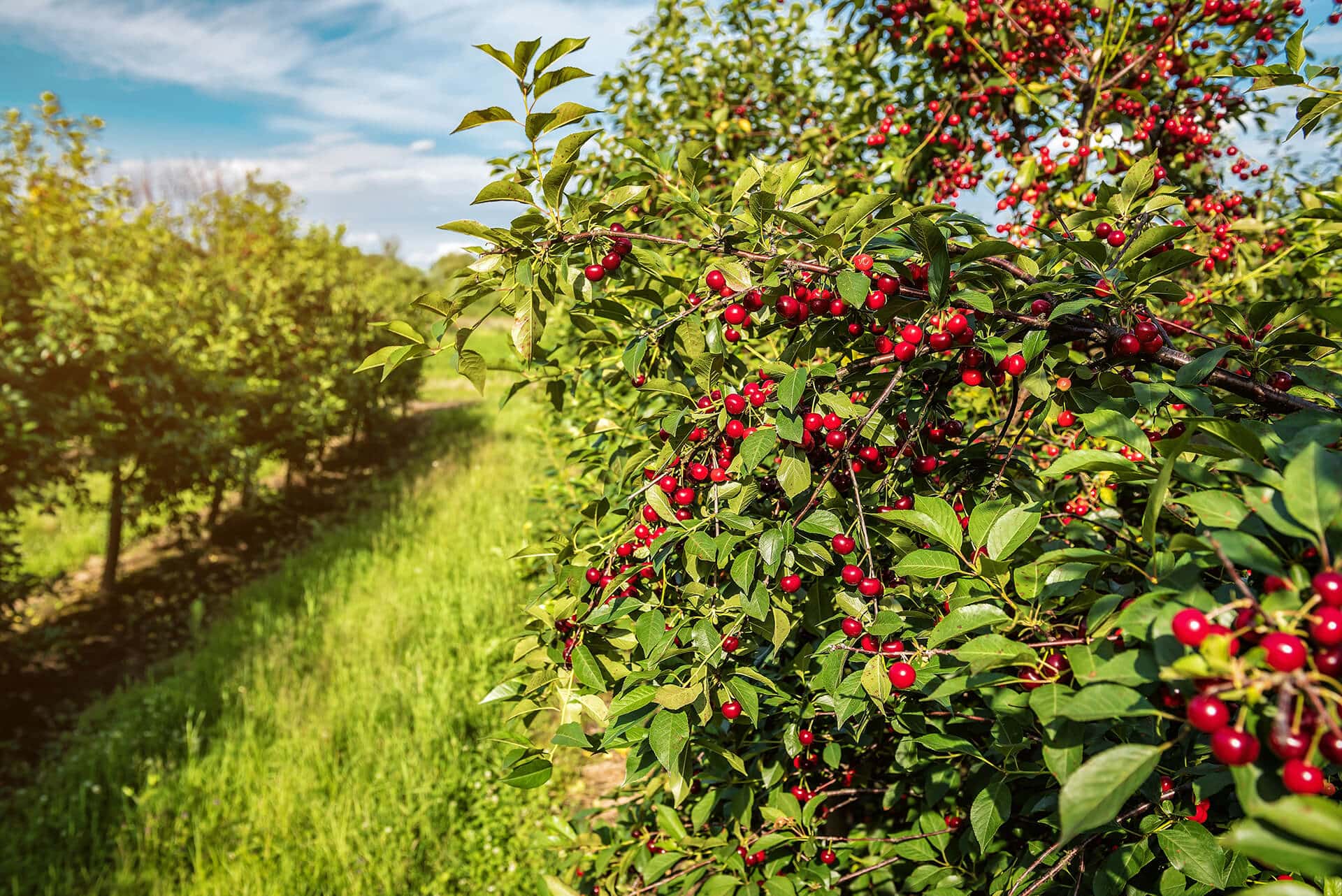
Perennials, such as sweet cherry trees (Prunus avium L., cv. ‘Summit’), protect their buds and reproductive tissues from winter cold by entering a state of dormancy. Winter dormancy is divided into two phenological stages, endodormancy and ecodormancy.1 The endodormancy phase is a state of true winter rest in which bud development is impossible, even under favorable environmental conditions. When endodormancy is released (t1), ecodormancy takes over, and bud growth potential is resumed. However, ontogenetic development remains suppressed due to hostile winter conditions until more favorable environmental conditions are present.
The seasonal transition from endodormancy to ecodormancy is a complex and tightly coordinated network of many molecular and environmental processes. Understanding winter dormancy is critical for the productivity of fruit trees, as increasing or fluctuating seasonal temperatures could impact the optimal timing for critical phenological stages to take place. The development of tools and strategies for adapting to future climate conditions will help ensure the viability of fruit production. Therefore, it is necessary to determine what drives the transition between these phenological stages and how this transition is regulated. Metabolomics could help decipher key biomarkers of winter dormancy with the goal of better adapting agriculture to future climate change.
Metabolon Insight: The Relationship Between Metabolomics and Phenological Stages
The Global Discovery Panel was used to identify individual metabolites and metabolic pathways associated with each phenological stage of sweet cherry trees.2 Cherry buds from different developmental stages were analyzed via global metabolomics. Metabolon also helped measure the abscisic acid (ABA) content in the flower buds of cherry trees at different phenological stages and under forcing conditions using a Targeted Panel.3
The Solution: ABA Content Regulates Sweet Cherry Bud’s Growth
Global metabolomics profiling detected 445 metabolites in sweet cherry buds, including amino acids, carbohydrates, phytohormones, lipids, nucleotides, and peptides. Large metabolic changes were found between the dormancy phases and the ontogenetic phase. For example, metabolomics data indicated that during the phases of endodormancy and ecodormancy, energy metabolism (glycolysis and the TCA cycle) is reduced to a minimum. However, the beginning of ontogenetic development leads to the upregulation of energy metabolism for the growth and development of sweet cherry buds. These findings reflect the resumption of growth and development after winter dormancy. Finally, among the 445 metabolites found in cherry buds, ABA peaked during endodormancy and declined through ecodormancy and ontogenetic development.
The research group also performed targeted metabolomics for ABA and ABA-related metabolites to confirm these findings. Targeted metabolomics showed that the ABA content declined over time between t1 and ontogenetic development.
The Outcome: Improving Phenological Modeling Based on Physiological Findings
Given the prospects of increasingly volatile temperatures, which may have serious implications for many growers of fruit trees, tools to anticipate the impacts of climate change are urgently needed. These challenges require renewed efforts to narrow remaining knowledge gaps through targeted experimentation. In the current study, this research team utilized global metabolomics to identify unique metabolites, which could later be used as suitable biomarkers, indicating the transition between phenological phases, such as endodormancy, ecodormancy, and ontogenetic development. They followed it with targeted metabolomics to better understand the “why” behind their discoveries. This knowledge contributes to understanding phenological traits, which is critical for tree crops. Most importantly, this robust dataset can help elucidate the mechanisms and biochemical pathways associated with the dormancy phases of sweet cherries.
Metabolon can create custom-targeted metabolomics panels to take your research to the next step. Ready to see what new insights metabolomics can help your research reveal? Contact us today to learn more.
References
1. Götz KP and Chmielewski FM. Metabolites that confirm induction and release of dormancy phases in sweet cherry buds. Metabolites. 2023;13(2):231. doi: 10.3390/metabo13020231
2. Chmielewski FM, Götz KP. Metabolites in Cherry Buds to Detect Winter Dormancy. Metabolites. 2022;12(3):247. Published 2022 Mar 16. doi:10.3390/metabo12030247
3. Chmielewski FM, Götz KP. ABA and Not Chilling Reduces Heat Requirement to Force Cherry Blossom after Endodormancy Release. Plants (Basel). 2022;11(15):2044. Published 2022 Aug 4. doi:10.3390/plants11152044