
Microbiome Panel
Take microbiome research to the next level
Our Microbiome Panel is a highly-curated metabolomics panel that screens for more than 800 key small molecules to accelerate microbiome discovery.
- Vetted Microbiome Metabolites
- Easily Integrate with Metagenomics Data
- Powerful Informatics Tools
Speak to a Microbiome Expert Today
Request a quote, get detailed information on sample types, or learn how metabolomics can accelerate your research.


Microbiome Research as a Key Driver in the Future of
Human and Animal Health
Microbiome research is now established as one of the most crucial areas of scientific exploration, as it uncovers the profound influence microorganisms have on host health, disease, treatment response and overall well-being. The microbiome’s capacity to generate a vast repertoire of metabolites has profound implications for health and disease. These microbial metabolites are key mediators of microbiome-host interactions, influencing various physiological and pathological processes.
To help researchers understand the functional outputs of microbiome activity, Metabolon designed a carefully curated panel of metabolites that reports on microbiome activity. The Microbiome Panel screens for more than 800 microbiome-associated metabolites that were vetted in scientific literature as microbiome-relevant, covering key biology that span dozens of chemical classes. Short Chain Fatty Acids are measured with rigorous absolute quantitation within the Microbiome Panel, enabling comparison of these microbially-derived and clinically relevant biomarkers to values reported in the literature. Collectively, these metabolites report on key outputs of microbial activity, moving beyond just characterizing the microbial community composition of a sample into measuring the molecules they produce that influence host physiology.
Top Microbiome Panel Pathways
Short Chain Fatty Acids – with absolute quantitation
Bile Acids – Primary and Secondary
Tryptophan (Indole) Metabolites
Amino Acid Metabolites Including Aromatic Compounds
Diet and Drug Metabolites
Antibiotics and Xenobiotics
70 additional pathways..
Short Chain Fatty Acids – with absolute quantitation
Bile Acids – Primary and Secondary
Tryptophan (Indole) Metabolites
Amino Acid Metabolites Including Aromatic Compounds
Diet and Drug Metabolites
Antibiotics and Xenobiotics
70 additional pathways..

Tailored Microbiome Solutions
Metagenomics Options for Integration with Metabolomics
Metabolon offers flexible metagenomics sequencing options – including amplicon sequencing, shotgun sequencing at various read depths and a bring your own approach– for microbial community profiling tailored to your research goals. These sequencing options are available to pair with the Global Discovery Panel or the Microbiome Panel. Metagenomic sequencing reveals the composition and genetic potential of the microbial community, while metabolomics captures the functional outputs that influence host biology. Together, these approaches combine for a comprehensive, synergistic view of microbiome activity and its impact on the host.
Integrated Bioinformatics Platform
Comprehensive Insights at the Click of a Button
Results from the Microbiome Panel are delivered in Metabolon’s Integrated Bioinformatics Platform (IBP) with user-friendly and powerful capabilities to analyze data and generate publication-quality figures. Clients who opt to include a metagenomics sequencing option as part of the Microbiome Research Solution can access the Microbiome Analysis Tool that transforms raw sequencing data to integrated metabolomics and metagenomics insights not available when either data stream is analyzed separately.

Comprehensive Data
Project Deliverables that Advance Your Research Objectives
Metabolon produces high-quality metabolomics datasets by implementing rigorous quality control (QC) measures at every step of the data generation process as part of adherence to an ISO 9001:2015-certified quality management system, enabling researchers to move forward confidently with analysis. Microbiome Panel projects receive a Client Data Table (CDT) with abundances of panel of metabolites detected in samples. Delivered data include metabolites named by matching acquired LC-MS data against our industry-leading library of authenticated standards for Level 1 identifications, with metabolites organized into pathways with other associated chemical annotations. Metagenomics data generated through Metabolon also undergoes a comprehensive QC evaluation before delivery in the IBP.
Expert Hands
Your Biological Research Partner
With 25 years of experience, Metabolon has completed more than 10,000 projects and been cited in more than 3,500 scientific publications. With a team of high-impact PhD-level metabolomics and bioinformatics experts, we have the collective skill, knowledge, and experience to help researchers uncover novel discoveries, advance biological understanding, and achieve clinical and commercial success. This experience culminates in offering interpretation report options that focus on metabolomics data alone or insights derived from the integration of metabolomics and metagenomics data streams to jump-start your research.
Featured Resources
Learn more about our Microbiome Panel and the impacts metabolomics has made on various research areas. Explore more resources here.
eBrochure: Global Discovery Panel
Guide to Successful Metabolomics Study Design
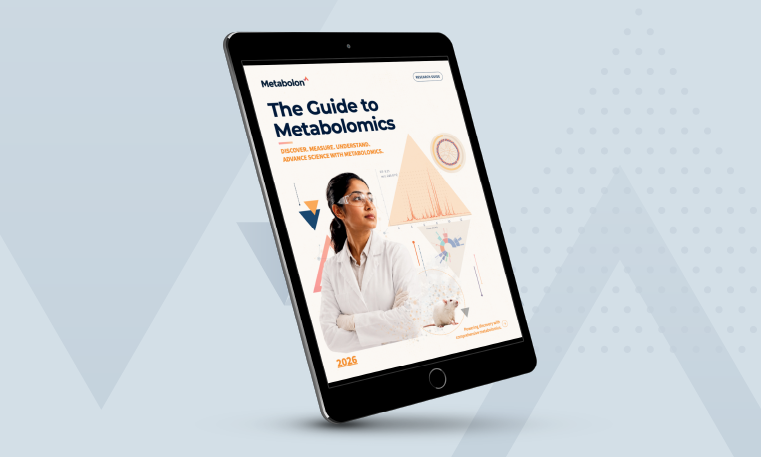
Why Metabolomics: Your Guide to Metabolomics


GET STARTED
Talk with an expert
Request a quote, get detailed information on sample types, or learn how metabolomics can accelerate your research. Find our contact details are here.
Find us on:

