Chapter 1
In this chapter, you'll learn what metabolomics is and why it is important to scientific discovery, how metabolomics is performed, what the two main profiling methods are in metabolomics, and how sample matrix selection impacts results and interpretation of metabolomics data.
Metabolomics is the study of metabolites, the small molecule reactants, intermediates, and products of metabolism as well as molecules from diet, exposure, and pharmaceutical origin. Metabolites, along with genes, transcripts, and proteins, represent different but interrelated levels of cellular processes that are organized according to the central dogma of biology. Since metabolites typically represent the terminal step in cellular processes,
these molecules are uniquely positioned to receive inputs from the genome, transcriptome, and proteome.
In addition, they are positioned to receive direct input from other factors including the microbiome and the environment (Figure 1). Thus, metabolites not only play a crucial role in mechanisms that directly impact the phenotype, but they also reflect an organism’s real-time biological status more closely than other molecule types. For these reasons, metabolomics is recognized for its ability to reveal deep phenotypic insights that cannot be deduced from genomics, transcriptomics, or proteomics alone.
The ability of metabolomics to ‘complete the picture’ in omics studies has played a major role in advancing scientific discovery, accelerating drug development, validating product quality, and delivering other actionable insights that drive measurable business outcomes and propel research forward.
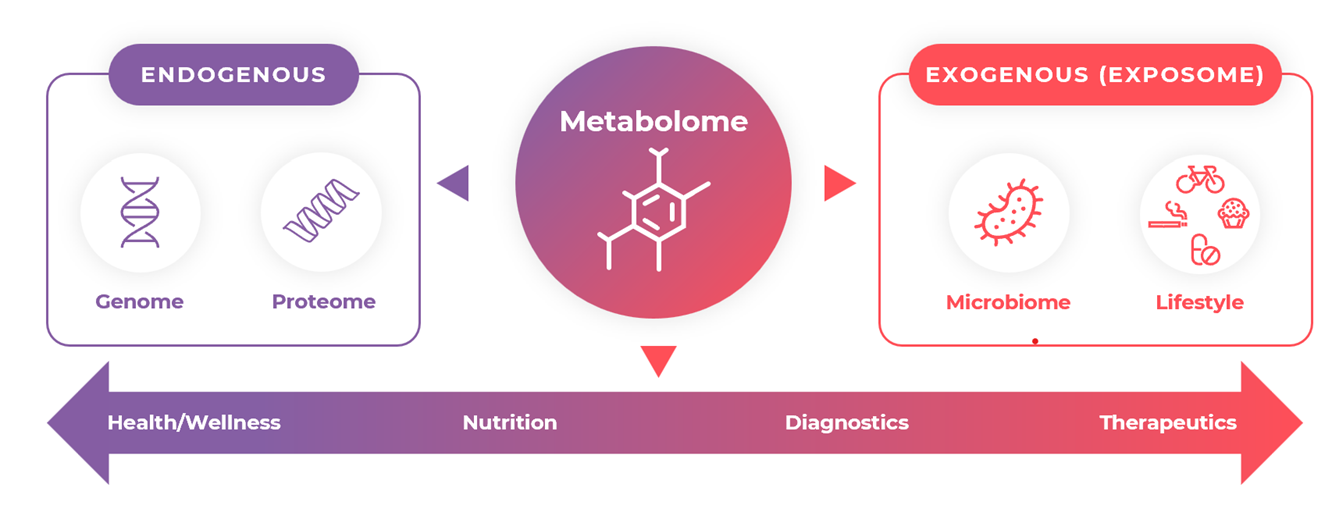
Figure 1. Inputs from cellular molecules and external factors converge on metabolites. The central dogma of biology dictates that cellular processes are carried out by each set of molecules propagating a signal according to inputs from the one(s) that come before it. Metabolites are uniquely placed to receive inputs from each set of cellular molecules as well as from the microbiome and other external factors, making them the closest reflection of the phenotype.
In this guide we will discuss the basic principles of metabolomics and explore peer reviewed scientific studies that showcase the utility of metabolomics in basic science, translational science, and various applied markets. This guide is written specifically for principal investigators, research scientists, R&D leaders, and innovation strategists, and is intended to show you how metabolomics can amplify study insights beyond traditional omics sciences.
In this guide you will learn:
Metabolomics is typically performed using either nuclear magnetic resonance (NMR) or liquid chromatography-mass spectrometry (LC-MS). NMR identifies
and measures metabolites based on energy emitted from cell nuclei after they are exposed to electromagnetic radiation. This approach has the advantage of keeping the sample intact, which allows alternative follow-up analyses to be performed. However, sample preservation forces a trade-off with sensitivity, which is relatively low with this technique. By contrast, LC-MS offers vastly superior sensitivity and resolution, and thereby greater scientific insight.
In an LC-MS workflow metabolites are isolated from their biological milieu, separated from each other using LC, and analyzed by MS. Mass spectrometers operate by converting the analyte molecules to a charged (ionized) state and then analyzing those ions and any ion fragments that are produced during the ionization process. Metabolites can then be identified by matching the signatures they produce in the MS coupled with their chromatographic (LC) characteristics to a biochemical reference library.
Fast MS scanning speeds enable a high degree of multiplexing and the identification and measurement of hundreds to thousands of compounds in a single analytical run. LC-MS accurately detects metabolites in concentrations that range from picomolar to the molar levels, which enables wide-coverage biochemical profiling.
Metabolomics is generally performed using either a targeted or untargeted (global) approach, depending on the study objective or hypothesis being tested. Targeted metabolomics is a quantitative technique that detects and measures a predefined set of metabolites, whereas global metabolomics is semi-quantitative and is used to detect a wide range of metabolites in a biological sample without prior selection (Figure 2).
The broad coverage offered by global metabolomics makes it particularly useful for generating hypotheses and conducting discovery studies, while targeted metabolomics is ideal for validating prior findings or testing a hypothesis associated with a known mechanism or set of biochemical pathways. The features of both profiling methods and their unique applications are demonstrated in the case studies discussed in Chapters 3-5.
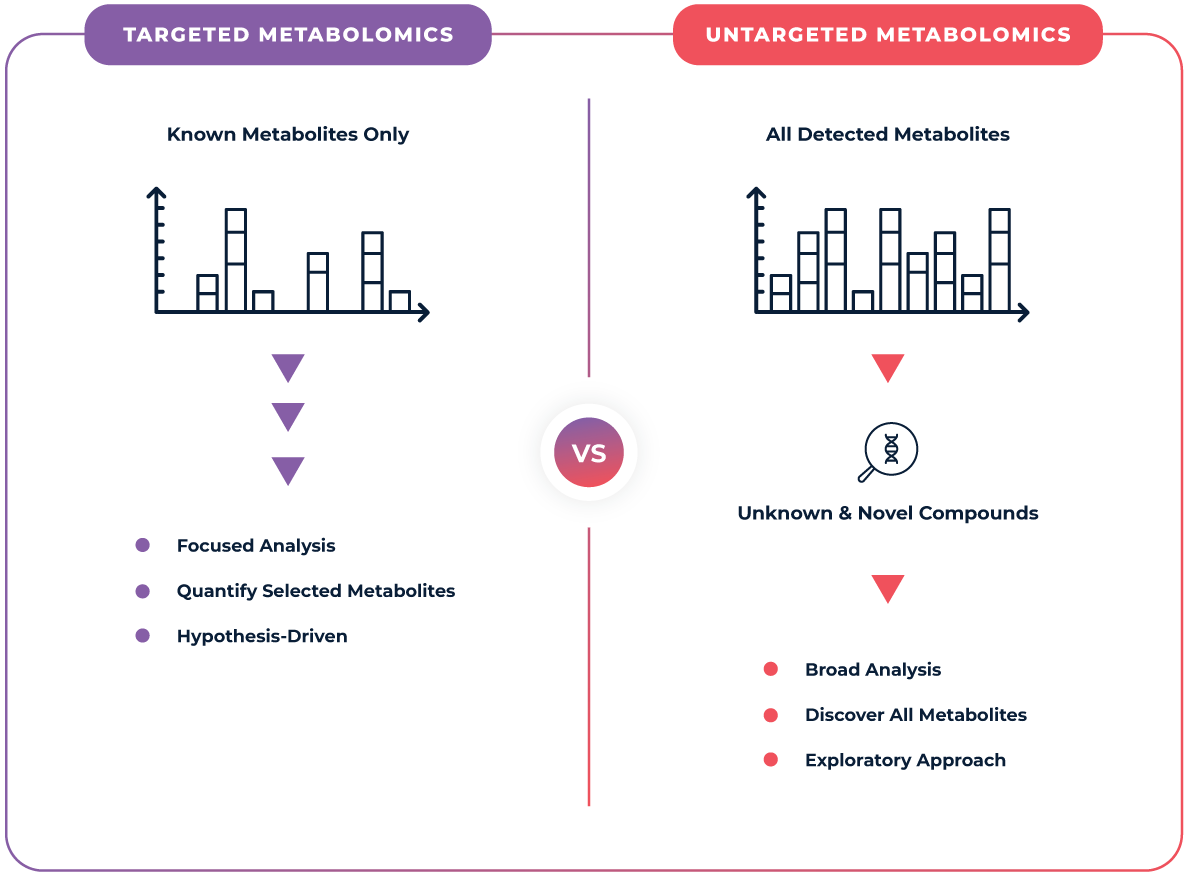
Figure 2. Summary of targeted and untargeted approaches.
Numerous sample matrices have been validated in metabolomics workflows including but not limited to various types of tissues, cells, plants, and biological fluids. In some cases, two sample types may be analyzed together to comprehensively evaluate a topic of interest. For example, an investigator looking to characterize mechanisms of irritable bowel disease may profile both serum and feces to determine how alterations in the gut microbiome affect circulating biomarkers of inflammation. Likewise, an investigator studying NAD(H) metabolism may profile serum and muscle tissue because certain metabolites in NAD(H) pathways are more abundant in one matrix over the other and thus profiling both provides a more comprehensive picture of the biological flux. Metabolon’s extensive experience with commonly used and alternative sample matrices are discussed in Chapter 5.
With a basic understanding of metabolomics in mind, we will now discuss challenges associated with metabolomics studies, and innovations that Metabolon has developed to address them. We will also discuss Metabolon’s chemical-centric (chemo-centric) approach to data analysis and explain how it elevates the quality of Metabolon-generated data above the rest of the industry.
Download this comprehensive guide developed to teach you the ins and outs of one of the most powerful -omics tools in any scientist’s toolbox: metabolomics.
Once you see the full value of metabolomics, the only remaining question is: who does it best? While many laboratories have metabolite profiling or analytical chemistry capabilities, comprehensive metabolomics technologies are extremely rare.
Accurate, unbiased metabolite identification across the entire metabolome introduces signal-to-noise challenges that very few labs are equipped to handle. Also, translating massive quantities of data into actionable information is slow, if not impossible, for most because proper interpretation takes two things that are in short supply: experience and a comprehensive database.
Using our robust platform and visualization tools, our experts are uniquely able to tell you more about your molecule and develop assay panels to help you zero in on the results you need.
Coverage
Ability to interrogate thousands of metabolites across diverse biochemical space, revealing new insights and opportunities
Comparability
Ability to integrate the data from different studies into the same dataset, in different geographies, among different patients over time
Competency
Ability to inform on proper study design, generate high‐quality data, derive biological insights, and make actionable recommendations
Capacity
Ability to process hundreds of thousands of samples quickly and cost‐efficiently to service rapidly growing demand
Request a quote for our services, get more information on sample types and handling procedures, request a letter of support, or submit a question about how metabolomics can advance your research.
Corporate Headquarters
617 Davis Drive, Suite 100
Morrisville, NC 27560
Mailing Address
P.O. Box 110407
Research Triangle Park, NC 27709
Phone
+1 (919) 572-1711
Fax
+1 (919) 572-1721
International Headquarters
Metabolon GmbH
Zeppelinstraße 3
85399 Hallbergmoos
Germany