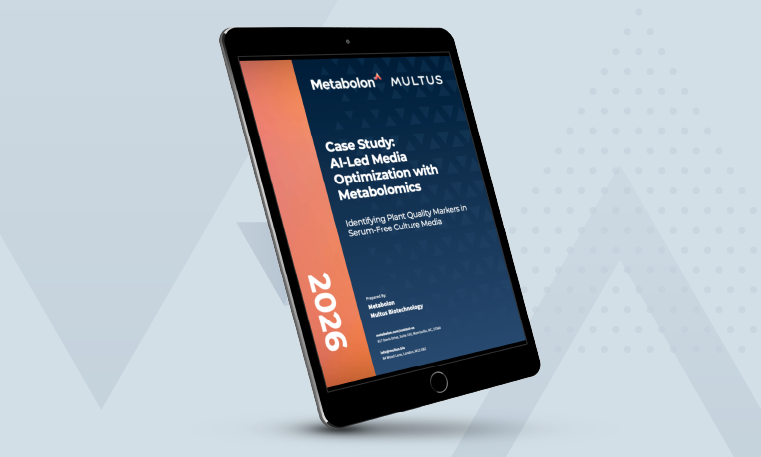
Learn more about how Multus, using the MediOP™ platform, screened over 1,000 media formulations across a search space of millions of combinations, optimizing a serum-free formulation for the growth of porcine adipose- derived stem cells (ADSCs).
Cost-effective, high-performance cell culture media are a major determinant of bioprocessing economics. Fetal bovine serum (FBS) has been the default growth supplement for laboratory culture media for years, but it is too expensive at the industrial scale, has an unstable supply chain, and carries contamination risks.
Plant-derived hydrolysates have emerged as promising candidates for serum replacements. However, a core challenge in incorporating hydrolysates into media is dimensionality. A single hydrolysate feedstock processed under different conditions produces markedly different chemical profiles. Moreover, because hydrolysates contain many chemicals, their interactions with other ingredients are highly variable, leading to non-linear interactions and necessitating multi-factorial formulation optimization.
For these challenges, metabolomics is a particularly appropriate investigative approach because it evaluates direct chemical composition. Additionally, integrating metabolomics data with media performance data can reveal which biochemical differences are associated with performance, variability, or toxicity, helping to highlight the conditions under which they can be used reliably.