
Applications | Bioprocessing
Bioprocessing
Learn how metabolomics can boost bioprocessing workflow efficiency and improve product quality.

Used By


Featured Bioprocessing Resources

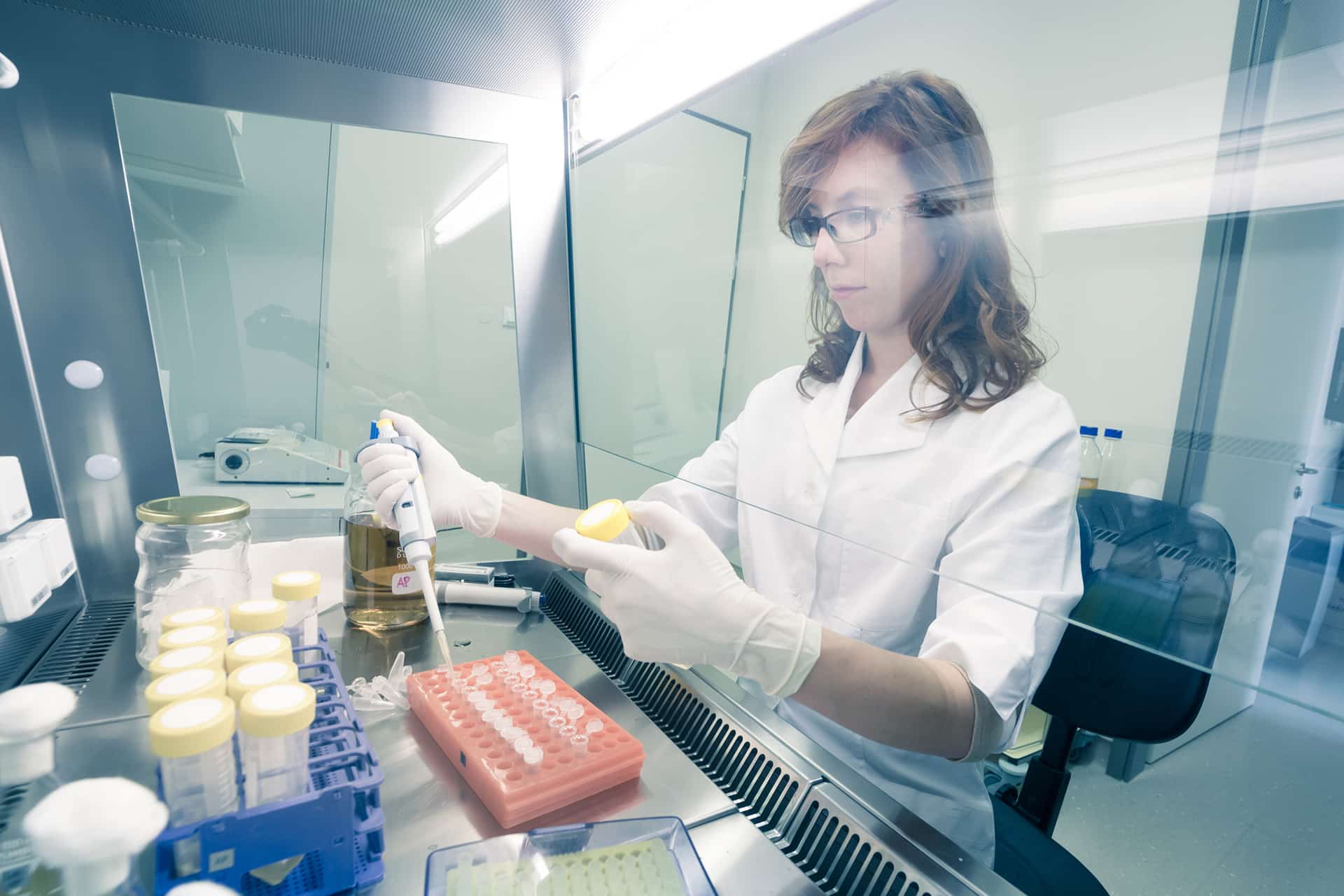

Metabolomics in Bioprocessing
Bioprocessing harnesses the power of living cells to create a wide range of products, from biopharmaceuticals to sustainable, biodegradable fuels, personal care products, and more. Because cells lie at the heart of bioprocessing, optimizing them is critical. However, traditional methods for monitoring these cellular factories often rely on indirect indicators (i.e., cell growth, viability) that can’t provide a clear picture of what is happening inside the cell to impact output. Therefore, engineering a robust and reproducible biological system for bioprocessing remains challenging.
By leveraging metabolomics, scientists can address these challenges by identifying subtle changes in cells and growth media that indicate stress, nutrient limitations, toxic byproducts, or the early stages of contamination. With this real-time information, researchers can intervene early to address problems and fine-tune the bioprocessing workflow, leading to more efficient workflows that yield higher quality products.
Uncover Functional, Actionable Insights with Metabolomics
Optimizing bioprocessing pipelines remains a significant challenge. Metabolon can help researchers implement improved optimization strategies through metabolomics analysis. Using both global and targeted metabolomics panels, researchers can track crucial changes in cells and growth media in real-time, facilitating early intervention and ensuring more efficient workflows.
Understanding the impact of nutrients on cell metabolism
Metabolomics can help researchers understand the nutrient requirements for cells and develop improved media for optimal growth and production. In a study published in Applied and Industrial Microbiology, researchers leveraged transcriptomics and metabolomics to study the impact of different nutrient sources on the methanotroph Methylomicrobium album BG8. Because methanotrophs are an attractive microbial platform for converting alternative feedstocks into valuable products, this work makes important contributions to the development of even more sustainable bioprocessing platforms. The results uncovered several metabolic responses specific to methanol and ammonium as carbon and nitrogen sources, respectively, and serve as a valuable starting point for additional research on optimizing methanotrophs for use in bioprocessing.
Optimization of high-yield cell lines
Metabolomics can provide critical information for assessing and optimizing production capacity of cell lines. In a study published in the Journal of Bioscience and Engineering, researchers developed a hyperosmotic resistant CHO cell line for high-yield monoclonal antibody production using bolus feeding, which is a simpler platform than fed-batch but increases osmolality to levels harmful to the cells. Using metabolomics, they showed that their new cell line preferentially generated osmolytes like sorbitol and erythritol, suggesting that these cells were better able to handle osmotic stress. These results agreed with other measures of cell growth and demonstrate that metabolomics can play an important role in the characterization of optimized cell lines.
Kamachi Y and Omasa T. Development of hyper osmotic resistant CHO host cells for enhanced antibody production. J Biosci Bioeng. 2018;125(4):470-478. doi: 10.1016/j.jbiosc.2017.11.002
Understanding and leveraging the impact of scale-up on cell metabolism
Metabolomics can aid in the scale-up of small-small fermentation processes to industrial level production, a critical step for technology transfer and commercialization. Optimizing substrate and oxygen distribution during the transition from small-scale to large-scale fermentation is critical for ensuring consistent, quality production. In a study published in Microbial Cell Factories, researchers performed real-time exometabolome analysis of S. cerevisiae cultures in bioreactors experiencing differences in dissolved oxygen, pressure set points, and added diluents during successful scale-up. This approach revealed critical metabolic and physiological changes in response to scale-induced hypoxia and demonstrated that heterogeneities in oxygen and nutrient distribution in the bioreactor are critical considerations during process scale-up.
Fu Z, Verderame TD, Leighton JM et al. Exometabolome analysis reveals hypoxia at the up-scaling of a Saccharomyces cerevisiae high-cell density fed-batch biopharmaceutical process. Microb Cell Fact. 2014;13(1):32. doi: 10.1186/1475-2859-13-32


Metabolomics Applications for Bioprocessing
- ECell line characterization
- EDevelop media and feed strategies
- EReduce variability
- EImprove product quality
- EEvaluate scale-up
- ERefine growth conditions
- EPredict cell line performance
- EPredict product quality
- EEnhance process monitoring

“Methods allowing in‐depth understanding of CHO metabolism during cultivation are essential for better control of recombinant drug production. Limited insight into the physiological state of the cell culture could be supplemented by metabolomics analysis, which is able to identify up to hundreds of different intracellular metabolites.”
Vodopivec M, Lah L, Narat M. et al.
Metabolomic profiling of CHO fed‐batch growth phases at 10, 100, and 1,000 L. Biotechnol Bioeng. 2019;116(10):2720-2729. doi: 10.1002/bit.27087
Understanding cell culture physiology with metabolomics
Bioprocess monitoring is based largely on methods that, albeit reliable for monitoring process performance, cannot provide insight into cell culture physiologic states. Understanding cell physiology at all bioreactor scales, from small to large, is critical for optimizing bioprocess development. Metabolomic analysis, which can identify hundreds to thousands of metabolites from a single sample, is a powerful tool for understanding the physiology of cell cultures used in bioprocessing. Studies have leveraged metabolomics to characterize the differences between low and high producing clones, describe cell metabolism during fed-batch, study the impact of temperature shifts on antibody glycosylation, and identify causes for process performance differences at different bioreactor scales.

Figure 1. PCA of intracellular metabolome measurements. Each plotted point represents one metabolome is labeled with day of cultivation.
For example, Vodopivec M, Lah L, Narat M. et al. designed a study to evaluate the utility of metabolomics for monitoring CHO cell fed-batch cultivation across different bioreactor scales (10L, 100L, and 1,000L). Using Metabolon’s Global Discovery Panel, the researchers identified four discrete metabolite groups corresponding to fed-batch culture phase, and these groups were consistent across different bioreactor scales, regardless of variability in viable cell densities. Their work was a good first step toward demonstrating the utility of metabolomics as a means for understanding cell culture physiology in bioprocessing, and identified several important areas of improvement for future studies.
Vodopivec M, Lah L, Narat M. et al. Metabolomic profiling of CHO fed‐batch growth phases at 10, 100, and 1,000 L. Biotechnol Bioeng. 2019;116(10):2720-2729. doi: 10.1002/bit.27087
Bioprocessing Publications and Citations
Metabolon has contributed extensively to publications ranging from basic research to clinical trials.
Bioprocessing Knowledge Base
Dive deeper by viewing our case studies and webinars. Learn more about how Metabolon furthers bioprocessing research and check back for more to stay up to date on the latest developments in metabolomics in bioprocessing.

Contact Us
Talk with an expert
Request a quote for our services, get more information on sample types and handling procedures, request a letter of support, or submit a question about how metabolomics can advance your research.
Corporate Headquarters
617 Davis Drive, Suite 100
Morrisville, NC 27560
Mailing Address:
P.O. Box 110407
Research Triangle Park, NC 27709