
Case Study
Metabolomics Profiling Impact of Preweaning Nutrition on Growth of Dairy Calves
The power of metabolomics was harnessed to identify the main metabolic pathways primed by early-life nutrition that may explain future productive outcomes in dairy cows.
Metabolomics is a powerful technology that enabled characterization of the main metabolic pathways primed by early-life nutrition. This information can be used to improve preweaning nutrition to facilitate a smoother transition to solid feed and, ultimately, has the potential to help maximize future productive outcomes in dairy cows.
Metabolomics is a powerful technology that enabled characterization of the main metabolic pathways primed by early-life nutrition. This information can be used to improve preweaning nutrition to facilitate a smoother transition to solid feed and, ultimately, has the potential to help maximize future productive outcomes in dairy cows.
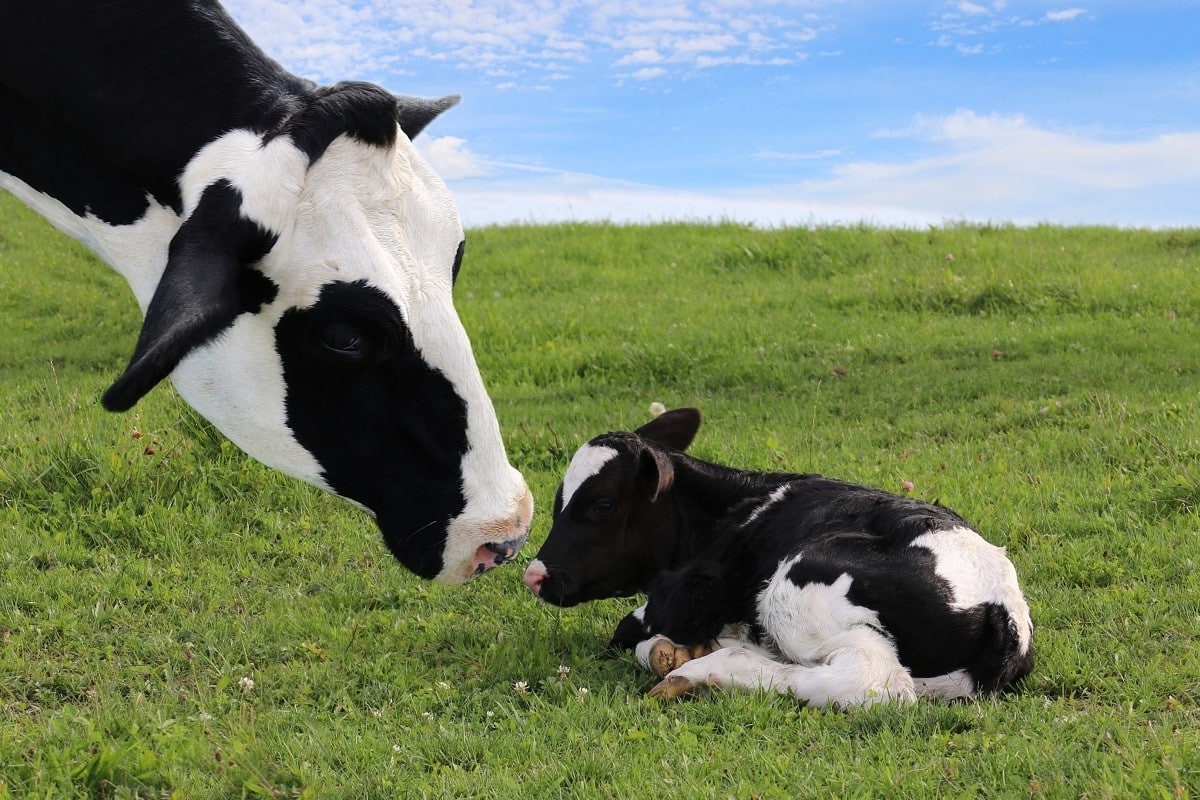
Metabolon’s services identified metabolites that are associated with differences in growth and development in dairy calves fed elevated or restricted milk supply preweaning1. Metabolon’s proprietary platforms and informatics were leveraged in conjunction with intake and growth performance to identify the main metabolic pathways associated with greater growth in neonatal calves fed an elevated milk supply preweaning.
The Challenge: Explain Calf Nutrition’s Impact on Future Dairy Production
Restricting whole milk or milk replacer supply in early life limits the growth of neonatal dairy calves. Multiple benefits are achieved by avoiding this common practice:
- Improved calf growth and feed efficiency1,2
- Earlier age to breeding size and maturity, potentially decreasing age at first calving and reducing rearing costs for replacement heifers3-5
- Increased milk yields during first lactation6-8
While these studies establish a causal association between early-life nutrition and future outcomes, no one really knows why or how the two are linked.
While causal associations are beneficial in guiding future studies, they do not provide a complete picture of the metabolic pathways primed by preweaning nutrition that may explain early-life nutrition’s impact on future productive outcomes in dairy cows.
Metabolon Insight: Understanding Mechanisms
Metabolon helped researchers understand the mechanisms by which early-life nutrition impacts growth and future lactation performance. Having one of the most advanced systems for measuring and understanding the metabolome, Metabolon’s proprietary technology filters and processes data using a chemocentric approach to rapidly remove noise and accurately identify metabolites. With over 5400 compounds in their proprietary reference library, Metabolon has the most comprehensive coverage across more than 70 metabolic pathways which enables more informed study results and novel discoveries.
The Solution: Metabolon’s Global Discovery Panel
The Global Discovery Panel was leveraged with Metabolon’s unmatched expertise to gain a clearer and more detailed picture of the metabolic pathways primed by early-life nutrient supply.
The Outcome: Elevated Milk Supply Impacts Energy and Protein Metabolism
Following serum sample extraction, UHPLC-MS analysis yielded raw peak area data which was subjected to a rigorous quality control process using Metabolon’s proprietary software. The compounds were identified and quantified by comparing to the more than 5400 compounds included in Metabolon’s extensive, proprietary library. This provided a comprehensive mechanistic view of the underlying biology allowing for accurate and confident interpretation.
This study demonstrated differences in growth and development in young heifers fed widely different amounts of milk replacer preweaning. The phenotypic differences were supported by distinct metabolic profiles associated with differential growth between the treatment groups. The group fed an elevated milk supply preweaning (ELE) consumed more milk replacer (by design), which resulted in lower starter intake and greater body weight and average daily gain as compared to the group fed a restricted milk supply preweaning (RES). Metabolomics profiling identified 908 metabolites which served to characterize treatment-dependent biochemical differences. Principal component analysis showed very distinct metabolic signatures by both time and level of nutrient intake; about 85% of biochemicals changed between days 2 and 49 (for both treatment arms) while 46.9% changed relative to treatment (at day 49). Clear responses in energy and protein metabolism were associated with greater nutrient intake and partitioning towards growth in the ELE group. Additionally, liver-associated metabolite and microbial-derived metabolite levels were found to be divergent between the two groups. While more research is needed, these metabolic differences identified during nutritional programming of the pre-ruminant phase could influence the animals’ dairy production parameters in later life.
By harnessing the power of metabolomics, the researchers not only characterized and mapped them to the appropriate biochemical pathways, but they generated hypotheses of modes of action that may explain how early-life nutrition impacts later-in-life productive outcomes in dairy cows. These learnings and understandings can help shape future early-life nutritional interventions to facilitate a smoother transition to solid feed and could potentially optimize heifer productivity at maturity.
References
1. Leal LN, Doelman J, Keppler BR, Steele MA, Martín-Tereso J. Preweaning nutrient supply alters serum metabolomics profiles related to protein and energy metabolism and hepatic function in Holstein heifer calves. J Dairy Sci. 2021;104(7):7711-24.
2. Jasper J, Weary DM. Effects of ad libitum milk intake on dairy calves. J Dairy Sci. 2002;85(11):3054-8.
3. Radcliff RP, Vandehaar MJ, Chapin LT, Pilbeam TE, Beede DK, Stanisiewski EP, et al. Effects of diet and injection of bovine somatotropin on prepubertal growth and first-lactation milk yields of Holstein cows. J Dairy Sci. 2000;83(1):23-9.
4. Raeth-Knight M, Chester-Jones H, Hayes S, Linn J, Larson R, Ziegler D, et al. Impact of conventional or intensive milk replacer programs on Holstein heifer performance through six months of age and during first lactation. J Dairy Sci. 2009;92(2):799-809.
5. Davis Rincker LE, Vandehaar MJ, Wolf CA, Liesman JS, Chapin LT, Weber Nielsen MS. Effect of intensified feeding of heifer calves on growth, pubertal age, calving age, milk yield, and economics. J Dairy Sci. 2011;94(7):3554-67.
6. Foldager J. Heifer calves reared on very high or normal levels of whole milk from birth to 6-8 weeks of age and their subsequent milk production. Proc Soc Nutr Physiol. 1994;3:301.
7. Bar-Peled U, Robinzon B, Maltz E, Tagari H, Folman Y, Bruckental I, et al. Increased weight gain and effects on production parameters of Holstein heifer calves that were allowed to suckle from birth to six weeks of age. J Dairy Sci. 1997;80(10):2523-8.
8. Soberon F, Raffrenato E, Everett RW, Van Amburgh ME. Preweaning milk replacer intake and effects on long-term productivity of dairy calves. J Dairy Sci. 2012;95(2):783-93.