
Company News
Metabolomic insights will support Army’s research into Warfighter health-readiness and optimal performance.
MORRISVILLE, N.C. – May 20, 2020 – Metabolon, Inc., the global leader in metabolomics, has been selected by the U.S. Army Research Institute of Environmental Medicine (USARIEM), to analyze the metabolic profiles of military personnel in a research program being conducted by the Military Nutrition Division. The findings will be used to help develop new rations, menus, policies, and programs to enable Warfighter health-readiness and optimal performance. The research program will focus on recovery nutrition, healthy eating, and physiological resilience.
“We are proud to collaborate with the U.S. Army Research Institute of Environmental Medicine on this important research program that will help to ensure U.S. soldiers are in optimal physiological shape when they are called into military operations,” said Greg Michelotti, Scientific Director, Metabolon, Inc. “Metabolomics provides a deep understanding of health and disease influenced by genes, environment, diet, and the gut microbiome. This research program will enable the army to specify which diets are optimal for peak performance and monitor soldiers’ performance and response to stress during specific training programs.”
Metabolon will perform global metabolomics on up to 14,000 human biological samples, including serum, urine, saliva, tissue and feces, over the next five-years. As part of the studies, Metabolon will provide full interpretation and analysis of the results to illuminate biomarkers and biochemical pathways observed.
“We are excited to work with Metabolon to determine how nutrition, environmental stress, and the gut microbiome interact to influence Warfighter health, performance, readiness and resilience,” said Phil Karl, USARIEM, Military Nutrition. “The planned studies will provide insight into the metabolic factors influencing those outcomes and inform the development of nutritional interventions for health and performance optimization.”
Metabolon now has multiple contracts with the U.S. military including a partnership with the Million Veterans Program (MVP) and a five-year contract with U.S. Army Center for Environmental Health Research (US ARMY CEHR) to research metabolic changes in post-traumatic stress disorder (PTSD).
About USARIEM
USARIEM provides solutions to enhance Warfighter health and performance through biomedical research. The Institute is internationally recognized as the DoD’s premier laboratory for Warfighter health and performance research and focuses on environmental physiology, physical and cognitive performance, and nutrition.
The Institute’s research divisions–Biophysics and Biomedical Modeling, Military Nutrition, Military Performance, Thermal and Mountain Medicine, and Research Support—conduct basic and applied biomedical science to sustain health and operational effectiveness. USARIEM conducts its mission by leveraging its unique capabilities and facilities and by partnering with industry, academia, and the government. USARIEM produces a variety of important solutions for training and operations, keeping Soldiers in the fight and requiring fewer Soldiers needed to care for preventable injuries. These solutions include leader decision aids, performance optimization doctrine, preventive medicine and planning doctrine, materiel development support, physiological monitoring strategies and predictive algorithms, and Health Hazard Assessments. USARIEM continues to be a leader in human performance research by anticipating future demands in rapidly changing, complex conflict environments and developing solutions for Army leadership, ensuring that Warfighters have the tools and training to fight, win, and come home safely.
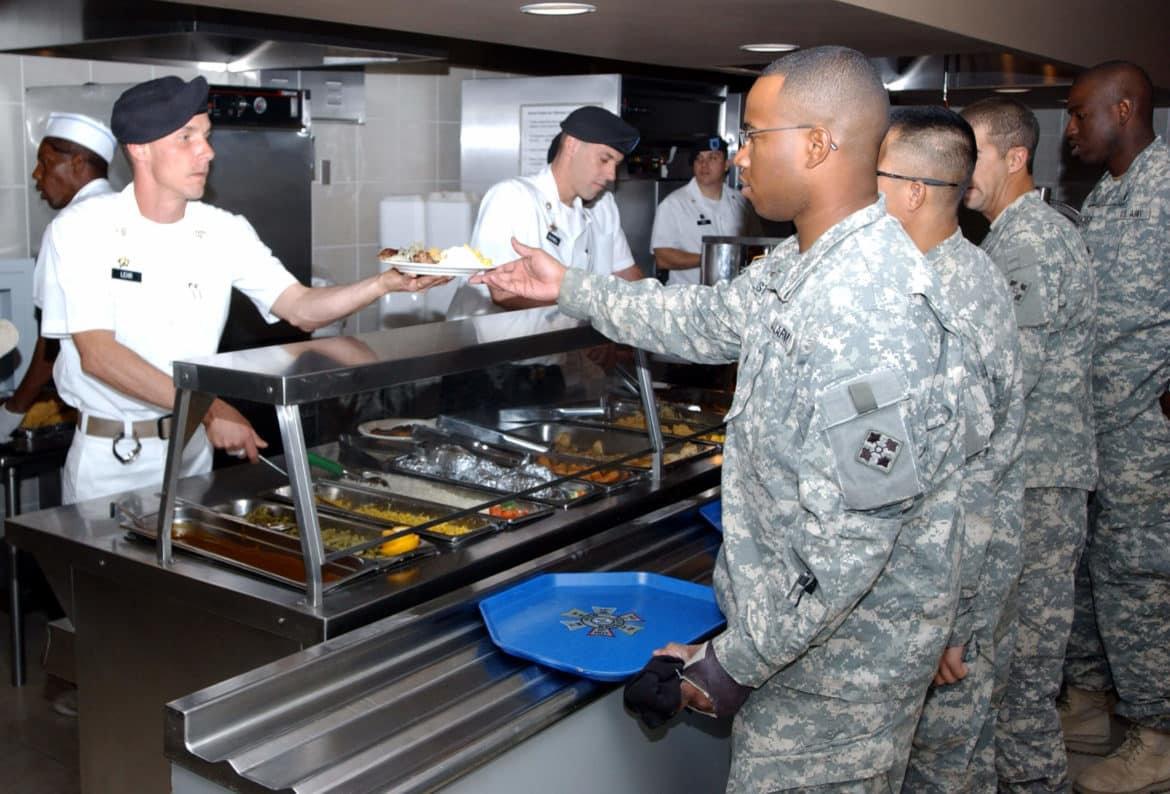
Photo by Sgt. Zachary Mott
Metabolomics, the large-scale study of all small molecules in a biological system, is the only omics technology that provides a complete current-state functional readout of a biological system. Metabolomics helps researchers see beyond individual genetic variation, capturing the combined impact of genetic and external factors, such as drugs, diet, lifestyle, and the microbiome, on human health. By measuring thousands of discrete chemical signals that form biological pathways in the body, metabolomics can reveal important biomarkers, enabling a better understanding of a drug’s mechanism of action, pharmacodynamics, and safety profile, as well as individual responses to therapy.
Metabolon, Inc. is the global leader in metabolomics, with a mission to deliver biochemical data and insights that expand and accelerate the impact of life sciences research and complement other ‘omics’ technologies. With 25 years of experience, 15,000+ client projects, 4,000+ scientific publication references, and ISO 9001:2015, CLIA, and CAP certifications, Metabolon has developed industry-leading scientific, technology, and bioinformatics techniques.
Metabolon’s Global Discovery Panel is powered by the world’s largest proprietary metabolomics reference library. Metabolon’s industry-leading data and translational science expertise help customers and partners address some of the most challenging and pressing questions in the life sciences, accelerating research and enhancing development success. The company offers scalable, customizable multiomics solutions, including metabolomics and lipidomics, that support customer needs from discovery through clinical trials and product life-cycle management.
For more information, please visit metabolon.com and follow us on LinkedIn and Twitter.
Sean Iverson
VP, Global Marketing
siverson@metabolon.com
Request a quote for our services, get more information on sample types and handling procedures, request a letter of support, or submit a question about how metabolomics can advance your research.
Corporate Headquarters
617 Davis Drive, Suite 100
Morrisville, NC 27560
Mailing Address
P.O. Box 110407
Research Triangle Park, NC 27709
Phone
+1 (919) 572-1711
Fax
+1 (919) 572-1721
International Headquarters
Metabolon GmbH
Zeppelinstraße 3
85399 Hallbergmoos
Germany