
Chapter 1
Although genes, transcripts, proteins, and metabolites each play distinct roles in biological systems, they work together through deeply interconnected networks to regulate cellular function, which underscores the importance of attaining a holistic, rather than siloed perspective of omics data to glean maximum biological insight. Multiomics is an integrative approach that combines data from two or more omics disciplines including genomics, transcriptomics, proteomics, or metabolomics, and models relationships between datasets to determine how changes in one molecular layer influences other layers (Figure 1).
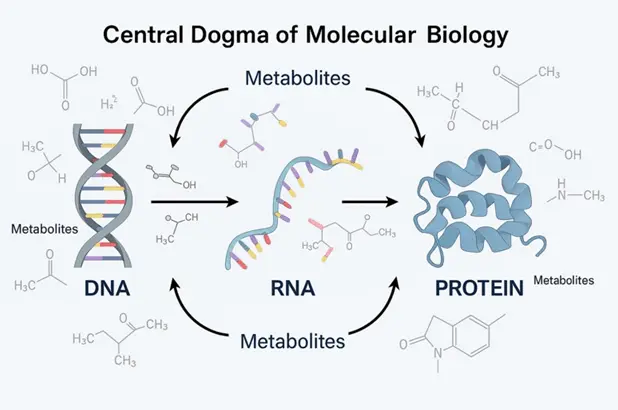
Figure 1. An overview of multiomics. Molecules at every layer of cellular function influence and are influenced by molecules in other layers through complex networks and feedback loops. Multiomics evaluates these layers in conjunction rather than separately, enabling comprehensive insight. Image licensed under CC BY 4.0.
Data integration both defines multiomics and distinguishes it from multiple omics studies, which analyze omics datasets independently of one another to determine what changes occur in each omics layer rather than determining relationships between layers. In this guide, we will focus exclusively on multiomics. We will discuss its basic principles, the current and future state of the industry, and explore peer reviewed studies that showcase the utility of multiomics in various scientific disciplines. This guide is written specifically for principal investigators, research scientists, R&D leaders, and innovation strategists, and is intended to show how multiomics, especially when including metabolomics, can both amplify study insights and offer solutions to longstanding challenges that cannot be adequately addressed by single omics sciences alone.
Within the past decade multiomics has evolved from a predominantly academic research discipline into a key component of modern biomedical research. Advances in next generation sequencing, mass spectrometry, and computational biology have made it possible to generate multiomic datasets at greater scale and with greater resolution than ever before. The significant insights afforded by present day multiomics approaches have significantly increased its utilization across the pharmaceutical, biotechnology, and academic research sectors.
Currently, multiomics is routinely used in drug development and precision medicine programs to improve target identification, characterize treatment response, and identify patient populations most likely to benefit from specific therapies. In translational and clinical research, multiomics plays an important role in identifying tumor subtypes and molecular drivers of tumor progression and often supports the discovery and validation of diagnostic and prognostic biomarkers for various conditions. Beyond human health, multiomics approaches are being applied to microbiome research, agriculture, and systems biology to gain a better understanding of complex biological processes.
The increasing adoption of multiomics in research and clinical settings is reflected in the commercial outlook for the industry, which projects the global multiomics market to increase from roughly $3.0 billion in 2024 to nearly $9 billion by 20321. Industry growth is also fostered by novel approaches designed to join omics technologies with artificial intelligence (AI) and machine learning to glean insights from complex datasets that may not be possible through traditional statistical methods. Consequently, the industry has invested heavily in platforms that integrate multiomics data with clinical, imaging, and real-world evidence datasets. Single cell and spatial omics are also emerging as fast growing segments of the market because they provide cellular and spatial context that cannot be captured in traditional bulk omics analyses.
Throughout the rest of this guide, we will discuss various multiomics techniques and their uses (Chapter 2) along with key studies that demonstrate the integration of Metabolon data with other omics sciences to support emerging technologies, model systems, and applications (Chapters 3-5). These examples not only show the diverse uses for multiomics, but also, how multiomics, particularly when metabolomics is included, reveals scientific insights far beyond single omics sciences alone. As the multiomics industry continues to evolve, Metabolon will remain at the forefront by pioneering novel analytical methods and data analysis tools designed to smoothly integrate Metabolon-generated metabolomics data with other omics datasets, thereby facilitating deep insights into complex biological relationships.