
Research Areas
Improve animal health, nutrition, and reproduction with metabolomic insights.
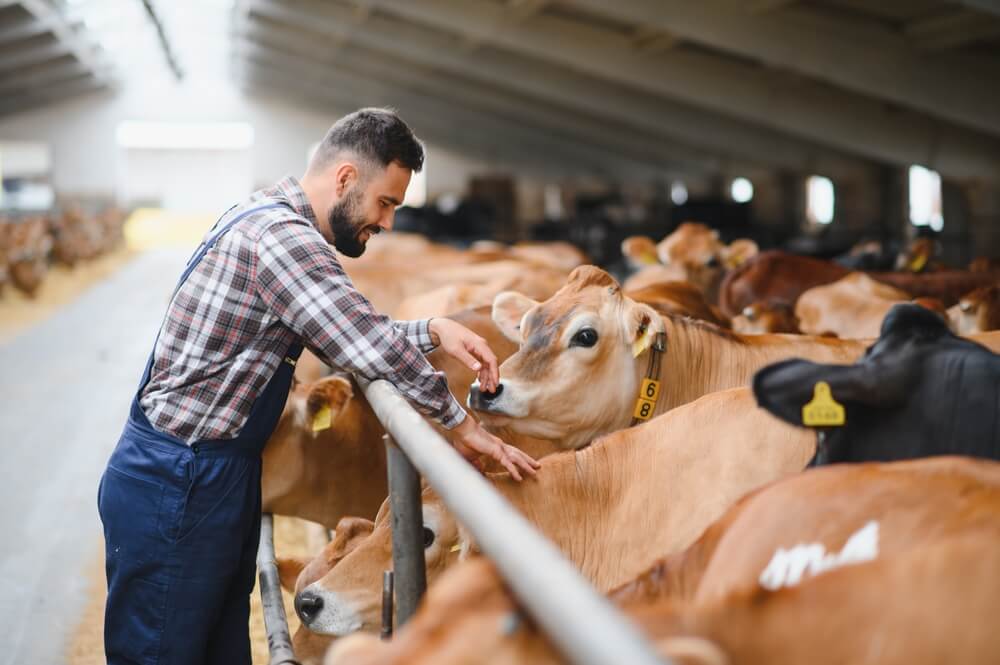
Metabolomics research in animal husbandry reveals the biochemical processes that drive growth, health, and productivity in animals. By analyzing metabolites, scientists can monitor nutrition, disease risk, and stress, providing actionable insights to optimize livestock management and improve overall well-being. Genetics, diet, environment, and husbandry practices all influence an animal’s metabolic profile, underscoring the complexity of enhancing performance and well-being.
Combining metabolomics with genomics or microbiome data gives a holistic view of animal health and efficiency. This approach links metabolic changes to genetic traits and environmental factors, enabling precision nutrition, early disease detection, and targeted interventions to boost productivity and support sustainable livestock management.
Metabolomics is increasingly applied in animal husbandry to monitor health, optimize nutrition, and understand the biochemical responses to environmental and dietary factors. This approach helps identify metabolic markers linked to growth, disease resistance, and stress, enabling more informed management and breeding decisions. Here, we highlight studies where metabolomics provided critical insights into livestock performance and well-being, guiding follow-up actions to improve productivity and animal care.
The whipworm Trichuris suis is a pig gastrointestinal nematode that parasitizes the cecum and proximal colon. Characterization of T. suis infection in the natural host can better inform approaches to integrated control procedures, thereby improving pig health and production qualities. In this study, Joseph Urban and colleagues evaluated the transcriptome of the proximal colon of T. suis-infected pigs at 21 and 52 days after inoculation. Infected pigs exhibited general inflammation around day 211.
Prominent gene pathways activated at both time points involved the Th2-response, de novo cholesterol synthesis, fructose and glucose metabolism, basic amino acid metabolism, and bile acid transport. Upstream regulatory factor analysis implicated the bile acid/farnesoid X receptor in some of these processes. Metabolic analysis indicated changes in fatty acids, antioxidant capacity, biochemicals related to methylation, protein glycosylation, extracellular matrix structure, sugars, Krebs cycle intermediates, microbe-derived metabolites, and altered metabolite transport.
Close to 1,200 differentially expressed genes were modulated in the proximal colon of pigs with a persistent adult worm infection that was nearly 90% lower in pigs that had expelled worms. Overall, these results support a model to test diets that favorably alter the microbiome and improve host intestinal health in pigs exposed to Trichuris.
Epidemiological studies have demonstrated a robust association between early-life nutrition and the risk of cardiovascular disease. In calves, the link between preweaning nutrition and short-term health is well recognized; however, less is known about the long-term implications of early-life nutrition on dairy cows into adulthood.
To address this knowledge gap, Dr. Martin-Tereso and colleagues aimed to investigate the effects of preweaning nutrient intake on milk production in the first two lactations, the risk of culling, and the metabolomic profiles of dairy cows fed a restricted (RES) or elevated (ELE) milk supply preweaning. Heifers fed the ELE diet exhibited a higher average daily weight gain during the preweaning period, resulting in greater body weight at 70 days of age2.
In the first lactation, cows fed the ELE diet preweaning exhibited higher dry matter intake, milk fat yield, and milk fat content than cows in the RES group. In the second lactation, fat- and protein-corrected milk yield, milk fat yield, and milk fat content were all higher in ELE cows. The likelihood of being culled before the third, fourth, or fifth calving was halved when calves were fed ELE compared with RES. Metabolomic profiling revealed distinct metabolomic profiles in milk at 60 days in response to preweaning milk supply.
The major metabolic pathways affected by preweaning nutrient supply at 60 days in milk included pyrimidine, sphingosine, guanidino, acetamido, and purine metabolism, as well as the tricarboxylic acid cycle. The metabolic profile differences between the groups describe a metabolic configuration that was sustained into adulthood and that may explain the improved productivity and resilience of cows that were fed a greater milk supply during the preweaning period.
Suboptimal preweaning nutrition in dairy calves has been causally associated with impaired adult metabolic health and lactation performance; however, the biological mechanisms linking early-life nutrient supply and future performance are poorly understood. To bridge this knowledge gap, Dr. Martin-Tereso and colleagues aimed to characterize growth, reproductive performance, glucose metabolism, and the metabolic profile of growing heifers that were fed a restricted (RES) or an elevated (ELE) milk supply before weaning.
Results showed that heifers fed the ELE diet exhibited a higher average daily gain during the preweaning period, resulting in greater body weight at 70 days of age. At 330 days of age, growth advantages were no longer significant, and preweaning nutrition did not affect age at first mating, first mating conception rates, age at conception, or number of matings per conception3.
The metabolomic serum data revealed that carnitine, glycerolipid, and purine metabolism were significantly affected by preweaning nutrient supply, reflecting long-term metabolic programming. At 370 days of age, insulin sensitivity was lower in RES heifers. Increasing the amount of milk replacers fed to calves preweaning had a sustained impact on metabolic processes, but long-term differences could not be detected in growth or reproductive performance, potentially due to the low number of animals.
Antibiotics are thought to improve growth and feed efficiency of poultry by altering the gut microbiota and its metabolic activities, but the underlying mechanisms remain unclear. With many growth-promoting antibiotics were withdrawn from poultry in the U.S., there is growing interest in identifying microbiota-mediated alternatives that support intestinal health, nutrient utilization, and immune function. To this end, Torey Looft and colleagues evaluated the effects of therapeutic and subtherapeutic in-feed bacitracin methylene disalicylate (BMD) on the intestinal health of turkeys over 14 weeks.
At 2 weeks of age, turkeys were randomly divided into 3 treatment groups (no antibiotic control, subtherapeutic BMD (50g/ton feed) or therapeutic BMD (200g/ton feed)). After 11 weeks, the antibiotic was withdrawn for 1 week until the end of the study. After euthanasia, cecal, ileal, and jejunal contents were sampled from each bird for microbiota analysis (16S RNA shotgun metagenomics sequencing) and metabolomic analysis using Metabolon’s Global Discovery Panel. Correlations between the metabolome and microbiome were assessed using Mantel tests.
Findings showed that gut location, age, and in-feed BMD treatment influenced turkey microbial communities, with gut location having the strongest effect4. BMD significantly altered cecal microbiota structure in a dose-dependent manner, while the jejunum and ileum were less affected. These shifts were observed after BMD withdrawal, showing the antibiotic has lasting impacts on microbial composition. The cecal communities showed reduced species richness throughout life, a common response to antibiotics in poultry and other livestock, which may contribute to improved feed efficiency. Microbiota succession occurred earlier in antibiotic-treated animals, and shifts in bacterial membership included enrichment of potentially beneficial Lachnospiraceae species (Ruminococcus 2, Clostridium XlVa, Fusicatenibacter) associated with short-chain fatty acid (SCFA) production and reduced inflammation, alongside decreases in potentially beneficial Lactobacillus, Turicibacter, and Subdoligranulum populations early in treatment.
Microbial composition differed by intestinal segment, with Firmicutes dominating the jejunum, ileum, and ceca, Proteobacteria present at low levels, Actinobacteria mainly in the jejunum, and Bacteroidetes in the ceca. Antibiotic treatment selectively enriched and inhibited both beneficial and potentially harmful taxa, including temporary increases in Escherichia. BMD reduced alpha diversity in the ceca by decreasing less abundant operational taxonomic units (OTUs), including unclassified Candidatus Saccharibacteria, while richness in the jejunum and ileum remained unaffected. These findings indicate that BMD reshapes turkey gut microbial communities in a location- and dose-dependent manner, altering both community composition and functional potential, with possible implications for growth, feed efficiency, and gut health.
A computational analysis of turkey cecal microbiomes and metabolomes revealed that in-feed BMD disrupted normal microbial metabolic networks. Bacterial species were correlated with a greater number of metabolites in control birds than in BMD-treated birds, indicating that BMD reduced the connectivity between microbial composition and metabolite production. Some genera that decreased under BMD treatment, such as Lactobacillus, Subdoligranulum, and unclassified Firmicutes, lost many of their metabolite associations, whereas a few genera enriched by BMD, like Clostridium clostridioforme and Ruminococcus torques, gained new associations.
Tryptophan metabolism was particularly affected by BMD and serves as a key link between microbiota and host physiology. Microbiota-derived tryptophan metabolites, including indole-3-acetic acid (IAA), indole-3-carboxylic acid, and 5-hydroxyindoleacetate, which act as aryl hydrocarbon receptor (AhR) ligands regulating intestinal immune homeostasis, were differentially associated with distinct bacterial taxa depending on BMD treatment. Clostridiales, Lachnospiraceae, and Ruminococcaceae were the main families correlated with tryptophan metabolites, though functional redundancy and specific species varied across control, subtherapeutic, and therapeutic groups. By the end of the experiment, BMD increased IAA, 3-indoxyl sulfate, and 5-hydroxyindoleacetate while decreasing indole-3-carboxylic acid, suggesting that antibiotic-induced shifts in tryptophan metabolism may modulate gut immunity and potentially benefit turkey health, though further studies are required to confirm these effects.
These findings indicate in-feed BMD impacted intestinal bacterial membership and function, and the magnitude was dose-dependent. Microbiota composition correlated with the metabolomic composition and populations that were enriched in one treatment group were correlated to more metabolites than in other treatment groups. Thus, it seems apparent that microbiota shifts are driving metabolite shifts. The coupling of metabolomics with bacterial membership surveys improves our understanding of the microbiota functional output, and the compounds interacting with the host. Overall, this study shows how metabolomics and metagenomics can identify potential targets for modulation to improve animal health and production.
“The metabolomics approach is beneficial to explore biomarkers to monitor meat production processes and products, leading to improvements in livestock productivity and meat quality.”
Susumu Muroya An insight into farm animal skeletal muscle metabolism based on a metabolomics approach Meat Science, Volume 195 2023. 108995, ISSN 0309-1740. https://doi.org/10.1016/j.meatsci.2022.108995
Once you see the full value of metabolomics, the only remaining question is: who does it best? While many laboratories have metabolite profiling or analytical chemistry capabilities, comprehensive metabolomics technologies are extremely rare.
Accurate, unbiased metabolite identification across the entire metabolome introduces signal-to-noise challenges that very few labs are equipped to handle. Also, translating massive quantities of data into actionable information is slow, if not impossible, for most because proper interpretation takes two things that are in short supply: experience and a comprehensive database.
Using our robust platform and visualization tools, our experts are uniquely able to tell you more about your molecule and develop assay panels to help you zero in on the results you need.
Coverage
Ability to interrogate thousands of metabolites across diverse biochemical space, revealing new insights and opportunities
Comparability
Ability to integrate the data from different studies into the same dataset, in different geographies, among different patients over time
Competency
Ability to inform on proper study design, generate high‐quality data, derive biological insights, and make actionable recommendations
Capacity
Ability to process hundreds of thousands of samples quickly and cost‐efficiently to service rapidly growing demand
Request a quote for our services, get more information on sample types and handling procedures, request a letter of support, or submit a question about how metabolomics can advance your research.
Corporate Headquarters
617 Davis Drive, Suite 100
Morrisville, NC 27560
Mailing Address
P.O. Box 110407
Research Triangle Park, NC 27709
Phone
+1 (919) 572-1711
Fax
+1 (919) 572-1721
International Headquarters
Metabolon GmbH
Zeppelinstraße 3
85399 Hallbergmoos
Germany
1. Dawson, H.D., et al., Molecular and metabolomic changes in the proximal colon of pigs infected with Trichuris suis. Sci Rep, 2020. 10(1): p. 12853.
2. Leal, L.N., et al., Preweaning nutrient supply improves lactation productivity and reduces the risk of culling in Holstein cows. J Dairy Sci, 2025. 108(6): p. 5875-5888.
3. Leal, L.N., et al., Effects of preweaning milk allowance on long-term metabolism in Holstein heifers. J Dairy Sci, 2025. 108(5): p. 4988-4999.
4. Johnson, T.A., M.J. Sylte, and T. Looft, In-feed bacitracin methylene disalicylate modulates the turkey microbiota and metabolome in a dose-dependent manner. Sci Rep, 2019. 9(1): p. 8212.